How to Choose a Bowling Ball: A Step-by-Step Guide to Finding the Right Fit
Weight, coverstock, core, drilling, and budget, explained in plain language so the ball you buy actually helps you knock down more pins.
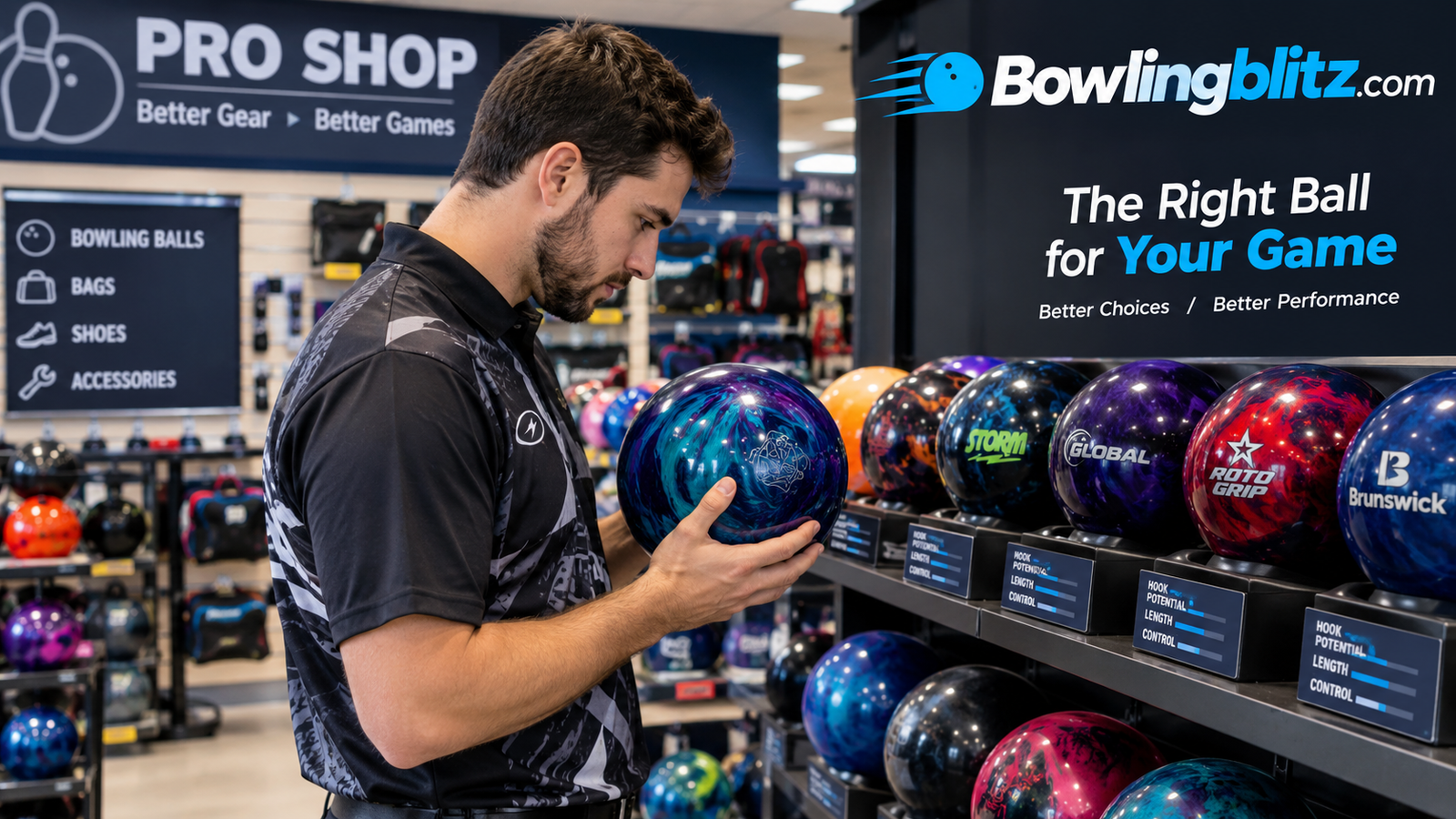
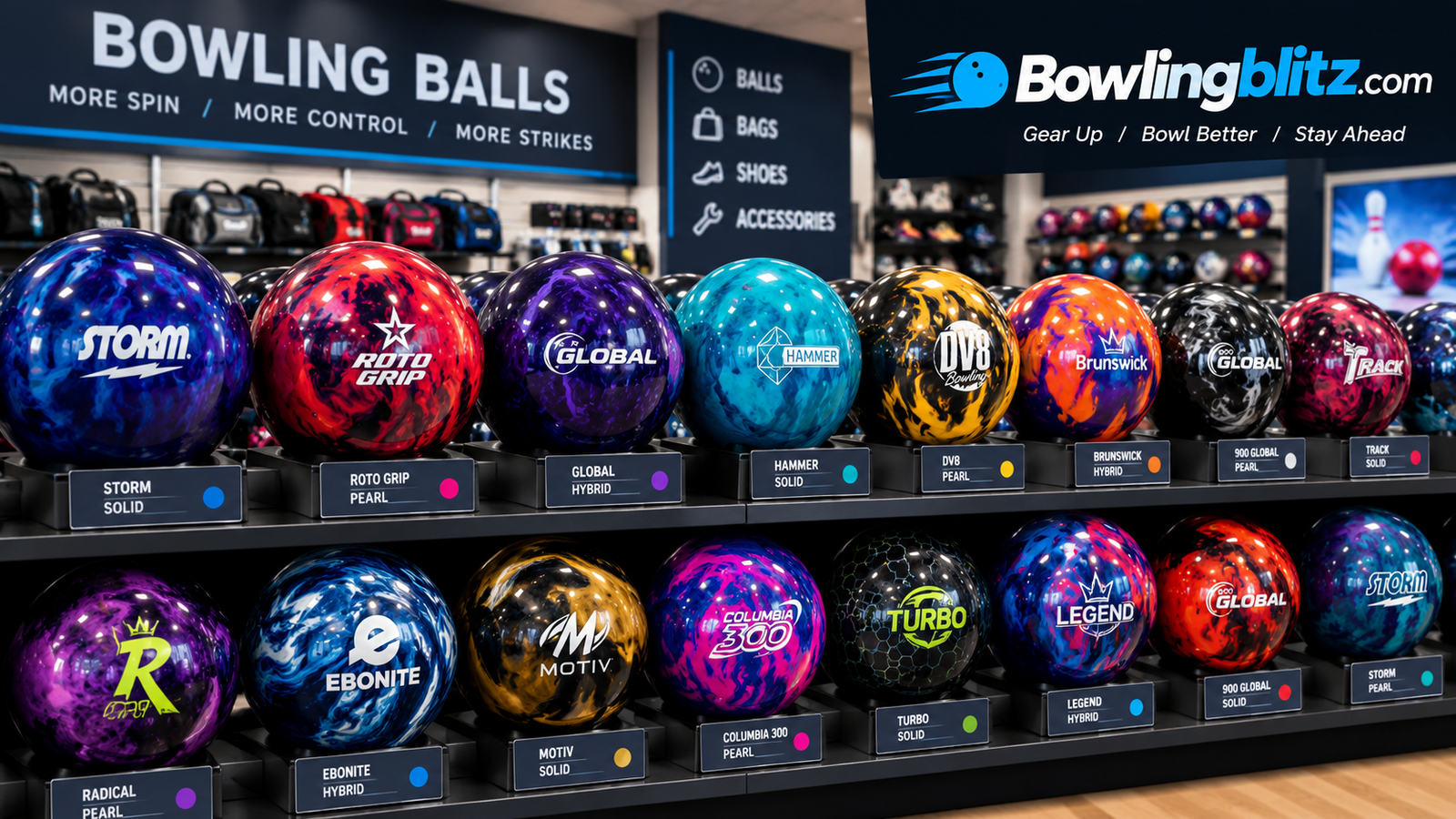
Walk into any pro shop and you will see a wall of glossy, colorful balls with names that sound like sports cars. It is easy to feel lost. The truth is that choosing a bowling ball is much less mysterious than the marketing makes it seem. Once you understand five or six core ideas, the wall starts to make sense, and you can pick a ball that matches your hand, your speed, and your goals.
Most people begin with a house ball, the scuffed ones sitting on the rack at the bowling center. They are free to use, but they are drilled for an average hand that does not exist. Fingers pinch, the thumb sticks, and the ball never rolls the way it should. The moment you buy your own ball, drilled to your exact measurements, bowling gets easier and a lot more fun.
This guide walks you through the decision in twelve clear steps. We begin with an honest look at your game, move through weight, coverstock, and core, then finish with fit, budget, where to shop, and how to keep your investment in good shape. Each step includes a simple diagram so you can picture what is happening. Whether you bowl once a month in a social league or you are chasing a higher average, you will leave knowing exactly what to look for.
The short answer
To choose a bowling ball, match its weight to your strength (roughly 10 percent of your body weight, capped at 16 pounds), pick a coverstock that suits your skill level (plastic or urethane for beginners, reactive resin as you grow), have it drilled to fit your hand by a professional, and stay inside a budget you are comfortable with. A well-fitted mid-priced ball beats an expensive ball that does not fit.
Step 1: Know Your Skill Level Before You Shop
Every good buying decision starts with an honest self-assessment. Bowling balls are built for different kinds of players, and the ball that helps a seasoned league bowler can frustrate a newcomer. Before you look at a single model, decide which group you belong in. There is no shame in any of them. The goal is simply to buy a ball that supports where you are right now.
Beginners (under about 120 average)
If you are still learning to repeat your release, a simple ball serves you best. Plastic (also called polyester) rolls in a mostly straight line, which makes it forgiving and predictable. That sounds boring, but it is exactly what you need while you learn to hit your target consistently. Many newer bowlers also enjoy an entry-level reactive ball because it adds a gentle curve without feeling wild. If you want specific model ideas, our roundup of the best bowling balls for beginners is a good place to browse.
Intermediate bowlers (roughly 120 to 170)
At this stage you probably have a repeatable approach and you are starting to see a natural curve. You are the player who benefits most from a reactive resin ball, because it lets you use that curve to hit the pocket at a better angle. You will also start noticing that lane conditions matter, and that one ball does not always behave the same way from one center to another.
Advanced bowlers (170 and above)
Competitive players usually own several balls, each tuned for a different lane condition. They talk about surface adjustments, core dynamics, and layouts. If this is you, the rest of this guide will feel familiar, and you will probably care most about steps 4, 5, and 7.
Other things to consider about yourself
- Ball speed: faster bowlers need balls that resist hooking too early.
- Rev rate: high-rev players create lots of hook on their own and may want a more controlled ball.
- Frequency: if you bowl a few times a year, a single well-fitted ball is plenty.
- Physical comfort: joint pain, small hands, or a past injury should shape your weight and grip choices.
Rule of thumb: buy for the bowler you are this month, not the bowler you hope to be next year. You can always upgrade later.
Ready to start looking?See what beginner-friendly bowling balls are available right now.
Shop Beginner Bowling Balls on AmazonStep 2: Pick the Right Ball Weight
Weight is the first physical decision, and it is the one people most often get wrong. Some bowlers go too heavy because they think a heavier ball hits harder. Others go too light because they are worried about their arm. The best weight is the one you can swing smoothly, release cleanly, and repeat for an entire night without your form falling apart.
The ten percent guideline
A widely used starting point is to choose a ball that is about ten percent of your body weight, up to the sanctioned maximum of 16 pounds. A 140-pound adult would try something around 14 pounds, while a 100-pound player would begin near 10. This is only a starting point. Hand size, strength, and comfort matter more than any formula. For a deeper look at how age, build, and style affect the number, see our guide on what weight bowling ball you should use.
| Bowler | Typical starting weight | Notes |
|---|---|---|
| Young children (under 8) | 6 to 8 lb | Choose a ball with small, properly spaced holes. |
| Kids and younger teens | 8 to 12 lb | Increase gradually as they grow stronger. |
| Adult women | 10 to 14 lb | Many comfortable bowlers sit around 12 lb. |
| Adult men | 13 to 16 lb | Start lighter if you are new to the sport. |
| Seniors or anyone with joint pain | 8 to 12 lb | A lighter ball protects the wrist, elbow, and shoulder. |
A simple test you can do at home
Pick up a ball at the bowling center and let it hang from your hand with your fingers and thumb in the holes. Take a slow practice swing. If the ball drags your shoulder down or forces you to muscle it forward, it is too heavy. If it feels like a toy and you can toss it around with no effort, you may have room to go up. Aim for a weight that feels substantial but controllable.
Going a bit heavier
- More pin carry and momentum
- Steadier through the pocket
- Better deflection resistance
Going too heavy
- Arm fatigue after a few games
- Sloppy release and lost accuracy
- Higher risk of strain or injury
Tip: when in doubt, go one pound lighter. A ball you can control will always outperform one that controls you.
Find your weight.Browse bowling balls in every weight from 6 to 16 pounds.
Browse Bowling Balls by WeightStep 3: Understand Coverstock Types
The coverstock is the outer shell of the ball, the part that touches the lane. It controls how much friction the ball creates, and friction decides how much the ball hooks. If you only learn one piece of bowling ball vocabulary, make it this one. Different materials produce wildly different reactions on the same lane, and the right coverstock is often the single biggest upgrade you can make.
Plastic (polyester)
The classic starter material. It is hard, smooth, and low in friction, so it slides down the lane with very little hook. That is a feature, not a flaw. Plastic is the standard choice for beginners, and it is also the go-to material for shooting spares because it travels straight at a single pin. It is typically the least expensive option, and it lasts nearly forever.
Urethane
Urethane sits in the middle. It grips the lane more than plastic but produces a smoother, more predictable arc than reactive resin. Many bowlers like it for dry lanes, for lower-speed games, or as a controlled second ball. It is not as common as it once was, but it remains a quietly useful option.
Reactive resin
Reactive resin is the modern standard. Its surface is slightly porous, which lets it absorb lane oil and bite into the wood or synthetic surface with strong friction. The result is a dramatic back-end hook that creates a better entry angle into the pocket. Reactive covers come in several flavors. Solid reactives hook earlier and are great on heavier oil. Pearl reactives skid farther before turning, which suits drier lanes. Hybrids blend both traits. If you want to learn how these materials are actually built, our explainer on what bowling balls are made of goes deeper.
| Coverstock | Hook potential | Best for | Typical price |
|---|---|---|---|
| Plastic | Very low | Beginners, spares, kids | Lowest |
| Urethane | Low to medium | Dry lanes, controlled arcs | Low to mid |
| Solid reactive | High, early roll | Medium to heavy oil | Mid to high |
| Pearl reactive | High, late and sharp | Medium to light oil | Mid to high |
| Hybrid reactive | Medium to high | All-purpose league ball | Mid to high |
Why choose reactive resin
- Big, readable hook on typical house shots
- Better pin action and higher scores
- Wide variety of price points
Why reactive may not suit you
- Harder to control while learning
- Can hook too much if your release is inconsistent
- Needs more care to stay in shape
Compare coverstocks.Look at reactive resin balls that match your game.
Shop Reactive Resin Balls on AmazonStep 4: Learn What the Core Does
Hidden inside every bowling ball is a dense weight block called the core. If the coverstock is the tire, the core is the engine. It shapes how the ball behaves while it rotates, and it is the reason two balls with identical covers can still move down the lane very differently. You do not need an engineering degree to choose one, but a basic understanding will help you read product descriptions with confidence.
Symmetric cores
Symmetric cores have the same shape and weight distribution on every side. They produce smooth, easy-to-predict motion, which is why most entry-level and mid-priced reactive balls use them. If you are new to performance balls, a symmetric core is almost always the right call because it forgives small mistakes.
Asymmetric cores
Asymmetric cores are shaped unevenly, so the ball wants to tilt and flare more as it travels. That extra motion gives experienced bowlers a stronger, more aggressive back-end reaction. It also means the ball can feel less forgiving, so it is usually best saved for players who already control their release well.
Reading the numbers: RG and differential
Product pages often list two figures. The first is radius of gyration, or RG. A lower RG means the ball starts rotating sooner and tends to hook earlier. A higher RG stores energy and tends to hold off, then turn later and more sharply. The second figure is differential, which describes how much the ball can flare. A higher number means more track flare and more potential hook. For most buyers, a simple summary is enough: low RG with low differential rolls early and smoothly, while high RG with high differential saves its motion for the end of the lane.
| Spec | Lower number | Higher number |
|---|---|---|
| RG (radius of gyration) | Starts rolling earlier, more length-friendly | Holds energy, snaps later |
| Differential | More controlled, less flare | More flare, bigger hook potential |
| Intermediate differential | Often called mass bias, a middle ground | Often paired with asymmetric cores |
Beginner shortcut: if the description says “smooth,” “predictable,” or “control,” it likely uses a symmetric core with moderate specs. That is a safe place to start.
See what is inside.Explore symmetric-core balls that are friendly to developing games.
View Symmetric Core Bowling BallsStep 5: Plan the Drilling Layout
Here is something many first-time buyers do not realize: a bowling ball is not finished when it leaves the factory. The factory ball is a blank, and the person drilling it decides where your finger and thumb holes go relative to the core. That decision, called the layout, can noticeably change how early or late the ball reacts. Two identical balls drilled differently can behave like two separate balls.
Pin up versus pin down
The pin is a small colored dot that marks the top of the core. Where it sits relative to your fingers affects the ball’s motion. A pin-up layout generally creates a smoother, earlier roll, while a pin-down layout often delays the reaction and then snaps harder at the end. Many pro shop operators will ask about your rev rate and ball speed, then choose a layout that gives you the reaction you want.
What a driller looks at
- Your speed and rev rate: these help decide whether to calm the ball down or help it read the lane sooner.
- Your typical lane conditions: heavier oil usually calls for a layout that reacts earlier.
- Your current ball reaction: if your last ball hooked too soon or too late, the driller can adjust.
- Your goals: more length, more flare, or simply more control.
If you are a casual bowler, do not stress over the details. Tell the driller you want a smooth, predictable reaction and let them handle the angles. A good driller will explain what they are doing and why, and will happily answer questions. If a shop rushes you or refuses to explain, that is a good reason to visit another one.
Good to know: a ball drilled once is hard to re-drill dramatically. Plugging and redrilling is possible, but it adds cost and can slightly change performance. Take your time with the first drilling.
Need a blank to drill?Check out undrilled and ready-to-drill bowling balls.
Shop Undrilled Bowling BallsStep 6: Get Your Span and Grip Right
If you remember only one thing about fit, remember this: a comfortable grip matters more than any fancy spec. A ball that squeezes your fingers or grabs your thumb will make every shot worse, no matter how well it is built. Fit is also the main reason a custom-drilled ball feels so much better than a house ball.
What span means
Span is the distance between the thumb hole and the finger holes. Too short and your fingers feel cramped and your wrist bends awkwardly. Too long and you stretch to hold on, which can strain your hand and cause you to squeeze the ball. A skilled driller measures your hand while it is relaxed and adjusts the span to match.
Conventional or fingertip?
With a conventional grip, your fingers go in up to the second knuckle. It feels secure and is the easiest way to hold the ball, so it is what most new bowlers and house-ball players use. With a fingertip grip, your fingers go in only to the first knuckle, which lets you create more lift and rotation. It takes some adjustment, and many bowlers move to it as their game develops. Neither is better in the abstract. The right grip is the one you can hold comfortably and release consistently.
Thumb hole fit
The thumb should slide out smoothly as you release. If it sticks, you may hear the ball drop or feel it tug your hand. If it is too loose, you will grip hard to keep from losing the ball. A pro shop can add or remove inserts, tape, or small grip adjustments to fine-tune the feel. Because your hand swells during a long night of bowling, many bowlers keep a small kit of fit tape in the bag.
Signs of a good fit
- Fingers sit comfortably, not squeezed
- Thumb exits cleanly on every shot
- No blisters or pinched skin after a session
Signs of a bad fit
- You grip tightly to hold the ball
- Your thumb sticks or squeaks
- Hand cramps appear after a few games
Support your grip.Browse finger inserts, thumb tape, and grip accessories.
Shop Bowling Grip AccessoriesStep 7: Choose a Surface Finish
Surface finish is the final piece of ball behavior, and it is the easiest to change. Every reactive ball comes with a factory finish that is either shiny or dull, and you can adjust it later with abrasive pads or polish. The idea is simple: a smoother, shinier surface slides farther before it grabs. A duller, rougher surface grabs sooner.
Dull, matte, and polished finishes
Bowlers describe surface roughness in grit numbers. Lower numbers, like 500 or 1000, are rougher and create more friction. Higher numbers, like 2000 or 3000, are smoother. A fully polished surface goes beyond grit and uses a liquid polish for a glossy shine. The same ball can behave quite differently with a matte versus a polished finish, which is why serious bowlers adjust the surface based on lane conditions.
What this means when you are buying
You do not need to obsess over finish when you are shopping. For most newer bowlers, a medium or dull finish keeps the ball readable and consistent. The listing will usually describe the factory surface in words. You can always have a pro shop adjust it later for a small fee, or learn to do it yourself once you gain experience.
| Finish | Reaction | Good when |
|---|---|---|
| Dull (500 to 1000 grit) | Earlier, smoother hook | Lanes with more oil |
| Medium (1500 to 2000 grit) | Balanced skid and hook | Everyday league conditions |
| Polished | More length, sharper back end | Drier lanes or lighter oil |
Keep it simple: start with the factory finish. Once you know how your ball reacts, you can make small changes to match a lane that is hooking too much or too little.
Fine-tune your finish.Find surface pads and polish for reactive bowling balls.
Shop Ball Surface Pads and PolishStep 8: Set a Realistic Budget
Bowling balls range from affordable to surprisingly expensive, and it is easy to overspend on features you will never use. The best strategy is to decide your budget first, then find the best ball that fits inside it. A mid-priced ball that fits you well will almost always serve you better than a premium ball that feels uncomfortable.
For a clearer picture of what to expect at each level, read our breakdown of how much a bowling ball costs. As a general guide, plastic balls sit at the low end, entry-level reactive balls come next, and high-performance models cost the most.
| Tier | What you get | Who it suits |
|---|---|---|
| Entry | Plastic or basic reactive, simple core | New bowlers, occasional players, spare balls |
| Mid-range | Quality reactive cover, symmetric core | Regular league bowlers and improving players |
| Premium | Cutting-edge cover and core combinations | Advanced and competitive bowlers |
Do not forget the extras
The ball is only part of the cost. Drilling usually costs extra, and you may also want a bag, a towel, and a ball cleaner. If you are bowling more than occasionally, a good pair of bowling shoes is worth it too. Our guide to the best bowling shoes helps you choose a pair that slides properly and feels comfortable.
- Drilling and fitting: often charged separately, so ask for the price upfront.
- Bag: protects the ball and carries your gear, with single and multi-ball options.
- Cleaner and towel: keep the surface consistent and extend the ball’s life.
- Shoes: rental shoes work early on, but your own pair is more comfortable and consistent.
Shop smart.Compare bowling ball prices across entry, mid-range, and premium options.
Compare Bowling Ball Prices