Where to Buy Bowling Balls (Online and Near You)
Fitting, price and return policy matter as much as the store you pick.
Start With What You Actually Need
Before you decide where to shop, decide what you are shopping for. A bowling ball is not a one-size item. It is drilled to your hand, so the best store is often the one that can measure you, not the one with the lowest sticker price.
Beginners usually need a reliable, affordable ball. If that is you, read our guide to the best bowling balls for beginners first. Know your weight too: our article on what weight bowling ball to use covers it. A solid walkthrough on how to choose a bowling ball will make every store visit easier.
Know your skill level and style
Think about how often you bowl. Someone who bowls twice a year at a birthday party has very different needs from a league bowler who throws every week. Casual players are well served by a simple plastic ball, while anyone chasing consistency eventually wants a reactive resin ball that hooks.
Your style matters as well. Bowlers who throw it straight need less from a ball than players who put a lot of revolutions on it. If you are not sure which camp you fall into, a pro shop can watch you throw a few frames and point you in the right direction.
Set a budget that includes drilling
Many shoppers focus on the ball price and forget the rest. Drilling, a bag, shoes, tape and a towel all add up. Decide on a total number before you start, then split it between the ball and the extras so nothing catches you off guard at checkout.
Write down your measurements
If you have ever been fitted, keep the numbers: span, finger sizes, thumb size and preferred pitch. Having them on hand makes every conversation with a seller faster, and it keeps you from relying on memory when a salesperson asks what you need.
Decide how long you plan to keep the ball
If you expect to bowl for years, spending more on a fitted ball is sensible. If you are testing the hobby, a cheaper entry-level ball is a smarter first step. Either choice is fine as long as it matches your plans.
Set a shortlist before you shop
Pick two or three ball options and two places to buy them. A short list keeps you from being swayed by flashy marketing and makes price comparison easy. Write down the weight, coverstock and price for each, then revisit the list once you have visited the stores.
Browse bowling balls on Amazon to get a feel for current options.
Shop Bowling BallsPro Shops: The Best Place for a Fitted Ball
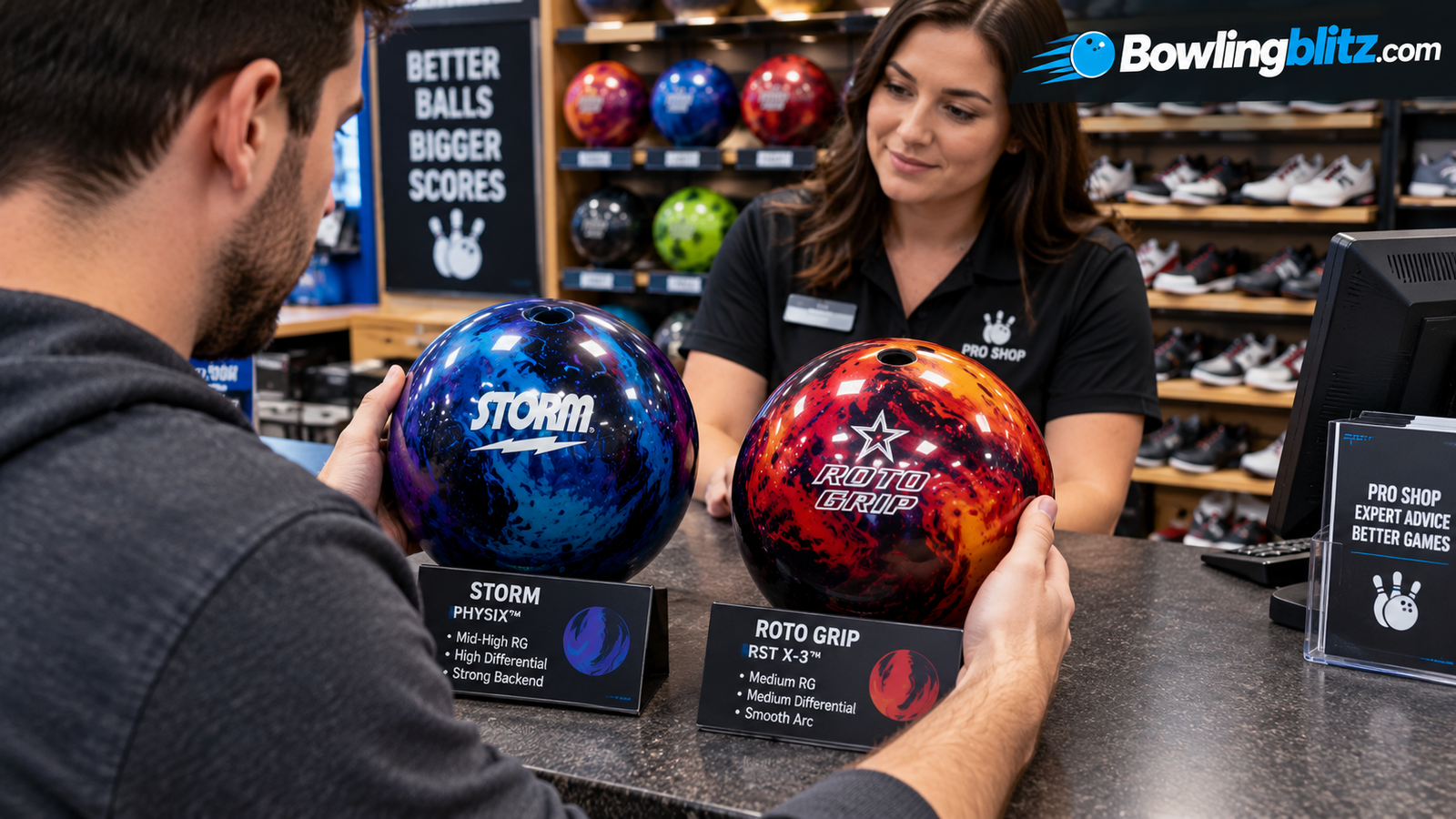
A pro shop is a specialty store, often inside a bowling center, run by a certified driller. They measure your span and grip, discuss your style, and drill the ball on the spot. For anyone buying more than a casual ball, this is the gold standard.
Why it works
You get real advice, a correct fit and usually a fast turnaround. Many pro shops also stand behind their drilling if the fit feels off.
- Expert fitting and drilling
- Advice matched to your game
- Easy follow-up adjustments
- Prices can be higher
- Smaller selection than online
- Not available in every town
What happens during a fitting
A fitting usually takes only a few minutes. The driller measures the distance between your thumb and finger holes, checks how far your fingers stretch, and has you hold a sample ball to see how it feels in your hand. They are looking for a grip that is secure without squeezing, so the ball leaves your hand cleanly on the release.
Good drillers also talk about layout, meaning where the holes sit relative to the ball’s core. That choice changes how the ball reacts on the lane, which is something no website can customize for you in person.
How to find a good one
Ask local league bowlers where they go. Look for a certified driller, a clean shop and someone who asks about your game instead of pushing the priciest ball. Search for pro shops near you, check recent reviews, and call to ask about walk-in fittings.
When a pro shop is the right call
If you plan to bowl regularly, want your own ball for years, or have had hand pain with house balls, a pro shop is worth the extra cost. The fit alone can improve comfort and accuracy right away.
Questions to ask before you buy
Walk in with a short list. Does the shop drill balls bought elsewhere, and what does that cost? Is the driller certified? What happens if the fit feels wrong after a week? Will they plug and redrill, and at what price? Clear, friendly answers are a good sign. Vague answers are not.
Typical services beyond drilling
Most pro shops also resurface balls, clean them, repair chips, plug old holes and sell grip aids, tape and bags. These services extend the life of a ball, so a shop you trust becomes more valuable the longer you bowl.
Match the ball to your game
A good shop will ask about your average, your speed, how you release the ball and which centers you bowl at. They should then suggest two or three options instead of one. Be wary of a hard sell toward the most expensive ball on the rack.
Try before you commit
Some shops keep demo balls so you can throw a few shots before paying. If that is offered, take it. Even one or two shots can show how the ball feels and how it moves down the lane.
How to get more value
Buy your ball, bag and accessories together and ask about a package price. Return for adjustments rather than guessing at fixes yourself. Over time, the relationship with your driller is worth as much as any single discount.
Want to compare prices before you visit a pro shop?
Compare on AmazonBowling Alley Shops and Lane Counters
Many bowling centers sell a small range of balls at the front desk or a mini pro shop. You can often handle the ball and ask staff about fitting. Stock is limited, but for a first ball it can be a convenient start.
If you are also upgrading footwear, see our picks for the best bowling shoes and learn why bowling shoes are different from regular sneakers.
Convenience is the big draw
If you already bowl at a center, buying there saves a trip. You can often try a house ball in a similar weight, then compare it to what the shop recommends. Staff know the lanes, which can help when you ask what works on the local oil pattern.
What to watch for
Selection is usually small, and some counters only stock a few brands. That is fine for a first ball, but it can make comparison shopping harder. Ask whether the center has a certified driller on site or only takes orders for an outside shop, since that affects how fast you get your ball back.
Ask about league and member deals
Some centers discount balls and shoes for league members or frequent bowlers. It never hurts to ask, and a small saving on a first purchase makes the next one easier.
Who runs the shop
Some bowling centers employ a full-time certified driller, while others work with a visiting specialist on set days. Ask when the driller is available so you do not make a trip for nothing.
Trying balls in a real setting
Buying where you bowl lets you compare how a ball feels in the building you actually use. Some centers let you throw a demo ball on the lanes, which is worth far more than reading a spec sheet.
Services you can expect
Most alley shops offer drilling, ball cleaning, resurfacing and basic repairs, along with grip aids and accessories. Prices are often lower than a standalone shop because overhead is smaller.
Questions for the counter
Ask which brands they carry, how long drilling takes and whether staff will work with a ball you bought elsewhere. A short conversation can show whether this shop will meet your needs over the long term.
Pair your new ball with proper shoes.
Shop Bowling ShoesBig-Box and Sporting Goods Stores
Large sporting goods chains sometimes carry entry-level balls. These are usually plug-style balls, often undrilled, meant for casual use. They are fine for a quick buy, but staff rarely know fitting, so you will still need a driller.
If you only want a ball for picking up leftovers, check the best spare bowling balls rather than grabbing the first one on the shelf.
What you will usually find
Big-box stores generally stock plastic or entry-level balls in a few common weights. Most are undrilled or have basic holes that suit nobody in particular. They are priced to be affordable, and they work for a casual night out.
The limits
Staff at general sporting goods stores rarely know bowling in depth, so you will not get fit advice. The ball may also sit on a shelf for a long time, so check the surface for scuffs and read the packaging carefully.
Who should shop here
This route suits parents buying for a child, people who want a cheap ball for occasional spare practice, and anyone who wants a quick purchase with a simple return policy. Serious bowlers should treat it as a stepping stone at best.
Seasonal and promotional stock
Big-box stores often stock bowling balls around holidays and back-to-school season. Selection can vanish quickly, so if you spot a ball you like, check whether it is available in your weight before you plan around it.
What to check on the shelf
Read the label for weight and material. Look at the surface for scratches, check that the packaging is intact and confirm whether the ball comes with finger holes. Choose a weight you can lift comfortably with one hand.
Return policy advantages
Large stores often accept returns on unused, undrilled balls, which gives you a safety net. Keep the receipt and packaging until you are sure about your choice.
When to move beyond big-box
If you start bowling every week or feel discomfort after a game, it is time to see a driller. A fitted ball is not a luxury once you bowl regularly, since it can make the sport more enjoyable and reduce strain.
See spare balls and entry-level options online.
Shop Spare BallsOnline Bowling Retailers
Dedicated online bowling stores offer the widest selection, frequent sales and detailed specs. Many offer drilling services: you send your measurements, or get measured locally, and the ball arrives drilled.
The catch is measurement accuracy. A wrong span can make a ball uncomfortable or unsafe to throw. Always get measured by a certified driller before ordering a custom drill.
- Huge selection
- Competitive prices
- Detailed reviews and specs
- No hands-on trial
- Fit errors are costly
- Returns on drilled balls are limited
Selection and sales
Online bowling stores list nearly every major brand, often with detailed specs such as coverstock type, core shape and recommended lane conditions. That detail helps you narrow options without guessing. Seasonal sales and clearance on older models can bring prices down noticeably.
Reading specs and reviews
Look at the coverstock first, since it affects how much the ball hooks. Then check the core and the intended lane condition. Reviews from bowlers with a similar style are more useful than general star ratings, so read a few before you click buy.
Ordering with a fitted drill
If you order a ball drilled to your measurements, double check every number before you confirm. A reputable retailer will walk you through measuring, or tell you to visit a local driller first. If a seller does not ask about your hand at all, treat that as a warning sign.
Types of online sellers
There are three main kinds. Specialty bowling retailers focus only on bowling and usually have trained staff. Pro shop websites sell the same stock their stores carry and often offer drilling. General marketplaces list many sellers at once, so quality varies. Knowing which one you are dealing with helps you judge how much support to expect.
Check the return policy line by line
Policies differ a lot. Some accept returns only on undrilled balls in original packaging. Others charge a restocking fee. Read the terms before you pay, and save a copy of them in case of a dispute.
Shipping and handling
Bowling balls are heavy, so shipping costs can erase a small discount. Compare the total price including shipping and tax, not just the listed price. Some retailers offer free shipping above a set order amount.
How to avoid fit mistakes
Get measured in person first. Write down span, finger sizes and thumb size, then enter them exactly as measured. If the retailer offers a fitting guide, follow it step by step. When in doubt, order the ball undrilled and have a local shop do the work.
Customer service matters
Before ordering, send a short question to the retailer and see how quickly they answer. A helpful reply is a good preview of how they will treat you if something goes wrong.
Start your search with a wide selection.
Browse Reactive BallsBuying Bowling Balls on Amazon
Amazon is convenient for undrilled balls, starter sets, bags and accessories. Check the seller, return policy and whether the ball is new. Many listings ship undrilled, so budget for drilling at a local shop.
Curious how materials affect performance? Our piece on what bowling balls are made of explains the difference between plastic, urethane and reactive resin.
Where Amazon shines
Amazon works well for undrilled balls, starter kits, bags, towels, wrist supports and cleaning products. Listings often show many customer photos and questions, which helps you spot issues such as scuffs or wrong colors before you commit.
How to shop safely
Prefer listings shipped and sold by Amazon or a seller you recognize. Check the return window, confirm the ball is new, and read recent reviews for notes about packaging damage. Verify the weight on the listing, because a few sellers list several weights under one page.
Plan for drilling
Because most balls here are undrilled, call a local pro shop before you order. Confirm they will drill outside purchases and ask what it costs. That one call can save you from owning a ball you cannot use.
Sorting through the listings
Search results mix new balls, used balls, bundles and bags. Use filters for weight, brand and condition, then sort by customer ratings. Open several listings in separate tabs and compare coverstock, core type and the stated weight side by side.
Read the questions and answers
The customer questions section is often more honest than the product description. Look for answers about drilling, scuffs, color accuracy and what is included in the box. If a question matches your concern and has no answer, ask it before you buy.
Starter bundles and accessories
Bundles that include a ball, bag and towel can be good value for a first purchase, but check that the ball suits you. Bag quality varies, so look for wheels, padding and a separate shoe pocket if you plan to carry gear regularly.
Gear worth adding to your cart
Useful extras include a microfiber towel, ball cleaner, finger tape, a wrist support and a bag with room for shoes. These cost little compared with the ball, and they help your equipment last.
Watch for counterfeit or mislabeled items
Be careful with listings that use stock photos only, have very few reviews or show a price far below others. Buy from a seller with a track record, and inspect the ball as soon as it arrives.
Check today’s Amazon listings.
View on AmazonUsed and Secondhand Bowling Balls
Used balls from marketplaces, garage sales or pro shop trade-in racks can save money. Inspect for cracks, deep gouges and worn coverstock. Remember that existing holes were drilled for someone else’s hand, and plugging and redrilling adds cost.
A used ball is a smart option once you know your preferred weight and style, but a risky one for a total beginner.
Where to find used balls
Options include online marketplaces, local classifieds, garage sales, league swaps and pro shop trade-in racks. The racks are often the safest bet, since staff inspect and clean the balls before selling.
What to inspect
Look for cracks, chips, deep gouges and a coverstock that feels dull or worn smooth. Check the finger holes for damage and ask whether the ball has been plugged. A ball with old plugs can still perform, but poor plug work may cause problems later.
The real cost
Remember that existing holes match someone else’s hand. Plugging and redrilling costs money, so a bargain ball can end up costing close to a new one. Do the math before you buy.
Used ball marketplaces
Online marketplaces and local classifieds list many used balls, often with photos and basic specs. Ask for close-up pictures of the surface and the finger holes, and ask how many games the ball has been used for. Meet in a public place if you buy locally.
Trade-in programs
Some pro shops accept trade-ins and resell them after cleaning. Prices are usually fair, and you can handle the ball before buying. This is often the safest used option because the shop has already checked the ball over.
Questions to ask a private seller
Ask the weight, the brand and model, whether the ball has been plugged or resurfaced, and why they are selling it. If a seller cannot answer basic questions, move on.
Who should buy used
Used balls make the most sense for experienced bowlers who know their weight and preferred span. They are also handy as a backup ball or a dedicated spare ball. If you are still learning, fit and comfort are worth the cost of a new, properly drilled ball.
Cleaning and care after buying
Wipe the ball with a proper cleaner, check the surface and have a driller inspect it before your first game. If the ball needs resurfacing, factor that into your budget.
Compare new ball prices before buying used.
Check New PricesOnline vs. In-Store: Side by Side
| Factor | Pro shop | Big-box store | Online |
|---|---|---|---|
| Fitting | Excellent | Rare | Needs local help |
| Selection | Moderate | Limited | Very wide |
| Price | Higher | Mid | Often lowest |
| Returns | Varies | Easy if undrilled | Varies by seller |
| Best for | Serious bowlers | Casual buyers | Experienced buyers |
The table above gives the quick view, but a few points deserve more detail. Pro shops win on service, which matters because a ball that fits well is easier to throw. Online retailers win on choice and price, which helps once you know what you want. Big-box stores sit in the middle, offering convenience but little guidance.
A hybrid approach works well
Many experienced bowlers combine both. They get measured in a pro shop, then order the ball online and pay the shop to drill it. Just ask the shop first, because some charge more to drill balls bought elsewhere and a few will not do it at all.
Think about support after the sale
If a hole feels too tight a week later, a local shop can adjust it quickly. Online sellers are harder to reach in person. That support is part of what you pay for at a pro shop.
Convenience versus control
Buying in person gives you control: you hold the ball, talk to a person and leave with something usable. Buying online gives you convenience and breadth, but you accept more risk. Which matters more depends on how confident you are about your measurements and preferences.
Timing
If you need a ball for a league starting soon, a local shop is faster. Online orders involve shipping, then drilling, which can stretch the wait. Plan ahead if you have a deadline.
Total cost, not sticker price
Add up ball price, shipping, tax and drilling for each option. A ball that looks cheaper online can cost the same or more once you include a drilling fee from a shop that did not sell it to you. Do this math before deciding.
A simple rule of thumb
New to bowling? Start in person. Experienced and sure of your specs? Compare online. Somewhere in between? Use a pro shop for fitting and advice, then decide where to buy.
Ready to compare online prices?
See Bowling GearWhat to Expect on Price
Entry-level plastic balls are cheapest, while high-performance reactive balls cost much more. Drilling is usually a separate fee. For a full breakdown, read how much a bowling ball costs.
| Ball type | Typical use | Price level |
|---|---|---|
| Plastic | Beginners, spares | Low |
| Urethane | Intermediate, drier lanes | Mid |
| Reactive resin | Regular league bowlers | Mid to high |
What shapes the price
Coverstock, core design and brand all push prices up. A ball with advanced materials and a complex core costs more than a plain plastic one. Newer releases cost more than older models that did well and are now discounted.
Hidden costs
Drilling is the big one, but also consider extra holes, a thumb slug, finger inserts, a ball bag and a cleaner. Some shops include drilling with an in-store purchase, so ask before comparing prices.
Ways to save
Watch for end-of-season sales, buy last year’s color, or choose a trusted older model. A mid-priced ball that fits well beats an expensive ball that does not.
Price tiers explained
Entry-level plastic balls sit at the low end and are built for simplicity. Mid-range balls often use urethane or basic reactive coverstocks and give you more hook. Premium reactive balls with advanced cores sit at the top and are aimed at bowlers who need precise control over ball motion.
Does a pricier ball make you better?
Not automatically. A ball cannot fix timing, release or accuracy problems. For most beginners, a well-fitted mid-range ball does more for scores than an expensive one. Upgrade when your technique starts to demand more from the ball.
Budget planning example
Start with the ball, then add drilling, a bag, shoes and a few accessories. Setting aside a little extra for adjustments keeps surprises small. If the total is higher than you expected, drop one tier on the ball before cutting corners on fit.
When to buy
New models tend to launch a few times a year, which pushes older versions onto sale. If you do not need the latest release, those discounts are a smart way to buy a proven ball for less.
Value over time
A ball used weekly may last several seasons with proper care, so the cost per game falls quickly. Cleaning it after play and having it resurfaced when needed protects that value.
See where today’s prices land.
Check PricesFitting and Drilling: Do Not Skip It
A ball that does not fit can cause blisters, joint strain and poor accuracy. A good driller measures span, finger spacing and thumb size, and checks your grip when you hold the ball. If you buy elsewhere, ask a local pro shop what they charge to drill outside balls.
Span, pitch and grip
Span is the distance from the thumb hole to the finger holes. Pitch describes the angle of the holes relative to the ball’s center. Both affect comfort and release, and small changes can feel large during a throw.
Signs of a bad fit
Blisters, a ball that squeezes your fingers, an inconsistent release or a thumb that sticks are common signs. If any of these show up, go back to the driller instead of pushing through the pain.
Ask for a test
Before leaving a pro shop, hold the ball, swing it gently and check that your hand feels relaxed. A good driller expects this and will adjust on the spot.
Why drilling is personal
No two hands are alike. Finger length, thumb size, flexibility and grip pressure all differ, and a ball drilled for someone else rarely feels right. Custom drilling accounts for these differences so the ball releases smoothly.
Conventional, fingertip and other grips
A conventional grip places fingers in up to the second joint and suits many beginners. A fingertip grip uses only the first joint and gives more leverage for experienced bowlers. A driller can recommend one based on your hand and how much you want to hook the ball.
Weight and balance
Drilling removes material, which slightly changes the weight and balance. Reputable drillers account for this so the finished ball matches the weight you ordered. Ask them to confirm the final weight before you leave.
Changes over time
Hands change with age, injury and seasons. Swelling in hot weather or after long sessions can make a snug fit uncomfortable. If your ball starts to feel different, ask the driller about inserts or small adjustments.
Protect your hand
Take pain seriously. A ball that causes repeated blisters or joint soreness is a sign to get a re-fit, not to toughen up.
Add finger inserts, tape and accessories.
Shop AccessoriesRed Flags to Avoid
- Prices far below every other seller
- No clear return policy on undrilled balls
- Sellers who will not share ball specs
- Pressure to buy a heavier ball than you can control
Learn a few bowling pin facts too, since knowing the sport makes you a sharper shopper.
Warning signs in the details
Poor photos, vague descriptions and missing weights are worth noticing. So are listings that skip the coverstock or core information, since reputable sellers usually share it.
Protect yourself
Pay with a method that offers buyer protection, keep your order confirmation, and photograph the ball when it arrives. If something looks wrong, contact the seller right away, before you drill or use it, because most return policies end once the ball is drilled.
Be careful with unusually low prices
A deep discount can be a genuine sale, but it can also mean the ball is old stock, damaged or not what the listing claims. Compare the price against several trusted sellers before you decide it is a deal.
Missing information
Reliable sellers list the ball’s weight, coverstock, core and condition clearly. If any of those are missing, ask. A seller who avoids direct questions is a seller to avoid.
Pushy sales tactics
A good advisor explains choices and lets you decide. If you feel rushed, told that a deal ends today or steered toward a heavier ball than you can comfortably swing, step back and shop elsewhere.
Vague return and drilling terms
Check how the seller treats drilled balls, restocking fees and damaged shipments. Terms buried in fine print deserve a closer read.
Trust your hands
If a ball feels awkward during a fitting, say so. It is far easier to adjust before the ball leaves the shop.
Shop trusted listings with clear return terms.
Browse ListingsMatching the Store to Your Bowling Level
| You are | Buy at | Why |
|---|---|---|
| First-timer | Pro shop or alley shop | Fit and guidance |
| Casual spare shooter | Online or big-box | Simple, affordable |
| League bowler | Pro shop, then online | Fit plus value |
| Budget hunter | Used or online sale | Lower cost |
First-timers
Go to a pro shop or alley shop. A fitted plastic or entry-level reactive ball gives you comfort and better results from your first frames.
Casual and spare shooters
You can shop online or at a big-box store. Pick a comfortable weight and expect to pay a drill fee if you want a proper fit.
League bowlers
Get fitted locally, then compare prices online. Keeping a good relationship with your driller pays off over many seasons, since you will want adjustments and resurfacing along the way.
Budget buyers
Combine a good used or older ball with a trusted driller. Spending a little on fit often matters more than spending a lot on the ball itself.
Kids and teens
Young bowlers grow quickly, so a lighter, inexpensive ball often makes more sense than a custom one. Choose a weight they can lift and swing easily, and revisit the fit every season or two.
Bowlers with hand or wrist concerns
If you have arthritis, an old injury or a smaller grip, go straight to a pro shop. A skilled driller can adjust span and hole size to make the ball more comfortable and safe to throw.
Competitive bowlers
Serious players often own several balls for different lane conditions. A pro shop relationship helps with layouts and resurfacing, while online sales help control the cost of building a set.
Gift buyers
Buying for someone else is tricky because of the fit. A gift card to a pro shop, or a bag and accessories, is often a safer choice than a ball you cannot size correctly.
Find a ball for your level.
Shop NowFrequently Asked Questions
Where is the best place to buy a bowling ball?
For most people, a pro shop is the best starting point because you get measured and fitted by someone who watches you throw. Online stores are better for selection and price once you know your specs. Many bowlers combine the two: get fitted locally, then buy where the price and service suit them.
Can I buy a bowling ball without drilling it?
Yes. Many balls are sold undrilled, especially online. You will need a driller to add the holes before you can use it, so check that a local shop will do the work and ask what they charge before you order.
Do pro shops drill balls bought online?
Most do, though some charge extra and a few decline. Call ahead and ask about outside-ball policy, drilling fees and turnaround time. Expect them to want the ball in good condition and to confirm the layout with you.
How much does drilling cost?
Fees depend on the shop, the ball and how many holes you want. Ask for a quote that includes thumb slugs, inserts and any custom layout. Some shops include drilling when you buy the ball there, which can make their total price competitive.
Is it safe to buy a bowling ball online?
It can be, as long as you get measured locally and buy from a seller with clear returns and responsive support. Avoid listings with missing details or prices that seem too good to be true, and pay with a method that offers buyer protection.
Are used bowling balls worth buying?
Sometimes. They can save money if the coverstock is in good shape and you know your weight and style. Factor in the cost of plugging and redrilling, since the existing holes were cut for another hand. For beginners, a new fitted ball is usually the safer pick.
Can I buy bowling balls at Walmart or Target?
Some large retailers carry basic or kids’ bowling balls, but selection is limited and stock changes. These are best for casual use. For a fitted ball or a performance model, a pro shop or specialty retailer is a better bet.
What weight should I buy?
Choose a weight you can swing smoothly without straining. Many adults start lighter and move up as they build strength and technique. Our guide on what weight bowling ball to use explains the common rules of thumb in more detail.
Do bowling alleys sell balls?
Many do, either at the front counter or through a small pro shop. Some only take orders and send them to a partner driller. Ask staff what they stock, whether drilling is on site and how long it takes.
Can I return a drilled ball?
Rarely. Because drilling is custom, most sellers treat drilled balls as final sale. That is why fit and measurements matter so much. Always read the return policy before buying and confirm the details with the seller.
What should I bring when buying a bowling ball?
Bring any past measurements, your usual bowling shoes and a rough budget. If you have a favorite house ball weight, note it down. Being prepared helps the driller recommend the right ball quickly.
How long does it take to get a ball drilled?
Many shops can drill a ball in minutes to a few hours, while busy shops may need a day or more. Online orders with drilling can take longer, so plan ahead if you need the ball for an event or league night.
Conclusion
The right place to buy a bowling ball depends on your goals. If you want comfort and accuracy, start with a pro shop. If you know your specs and want savings, shop online. Either way, get measured, compare prices and check return policies before you pay.
Whichever route you choose, the same few steps apply. Know your weight, get your hand measured, compare total prices including drilling and shipping, and read the return terms before you pay. A ball that fits well is a ball you will actually enjoy using.
If you are still deciding, revisit our guides on choosing a ball and the best options for beginners, then take your shortlist to a pro shop or compare it online. A little preparation turns a confusing purchase into an easy one.
Ready to pick yours? Start browsing now.
Find Your Bowling Ball