Best Spare Bowling Balls: 10 Plastic and Urethane Picks That Actually Help You Pick Up More Spares
A good spare ball takes the guesswork out of the shots that decide your score. Here is how to choose one, which models are worth your money, and how to shoot with it.
Quick answer: for most bowlers, a plain polyester spare ball like the Storm Ice or the Columbia 300 White Dot is the smartest buy, because it rolls straight, forgives small mistakes and costs far less than a performance ball. If you bowl on drier lanes or want a little more bite on the pins, a urethane option such as the Storm Mix or Hammer Axe is worth a look.
Table of contents
- Why a dedicated spare ball matters
- Spare ball materials explained
- What to look for before you buy
- The 10 best spare balls at a glance
- Reviews: Storm Ice, Columbia 300 White Dot, KR Strikeforce
- Reviews: Brunswick TZone and MOTIV Aspire
- Reviews: ELITE Star and Hammer Black Widow Viz-a-Ball
- Urethane spare balls: Storm Mix and Hammer Axe
- Weight, drilling and cost
- How to shoot spares with your spare ball
- Plastic vs urethane: which should you pick?
- Care, buying tips and common mistakes
- Frequently asked questions
- Conclusion
Ask any league bowler where their average slips, and the honest answer is rarely “my strikes.” It is the leaves. A solid first shot that leaves a single pin standing is a gift, and missing that gift is the most expensive mistake in the game. Over a three-game series, a handful of missed spares can cost you thirty or forty pins without ever touching your strike percentage.
That is exactly why a dedicated spare ball exists. It is not a fancy piece of equipment, and it does not have to be. What it does is give you a ball that behaves the same way every time, so you can aim at a pin instead of fighting a hook you cannot predict. This guide walks through the best spare bowling balls you can buy right now, explains how plastic and urethane differ, and shows you how to use your new ball once it is in your hands.
We looked at ten popular options, from budget polyester standbys to two urethane balls that bridge the gap between a pure spare ball and a reactive-resin strike ball. Along the way you will find honest pros and cons, a side-by-side comparison, and practical advice on weight, drilling and care. If you are still sorting out the basics of ball selection, our guide on how to choose a bowling ball is a good companion read.
Why a Dedicated Spare Ball Matters More Than You Think
Most bowlers start with one ball. It might be a house ball, or a first purchase from a sports store, and it handles everything: strikes, spares, the occasional wild shot into the gutter. As your game develops, that one ball starts to work against you. Strike balls are built to hook. They have coverstocks that grab the lane, cores that make them turn over, and surfaces designed to read oil. Those features are wonderful for hitting the pocket. They are a headache when you need to knock down a single pin in the corner.
The problem with shooting spares using a strike ball
A reactive-resin strike ball reacts to the lane. Even a little, it changes direction as it travels down the boards, and the amount of change depends on the oil pattern, your speed, your rev rate and how clean the ball surface is. When you throw at the full rack, a bit of variation barely matters because ten pins cover a lot of wood. When you throw at a lone seven-pin, a two-board miss is a missed spare.
Shooting spares with a strike ball forces you to make constant mental corrections. You have to guess how much the ball will hook from a new starting position, and that position is on a different part of the lane, with a different amount of oil, than the one you have been playing all night. Many bowlers get through this by changing their hand position or speed, and that introduces yet another variable. A spare ball removes most of that guessing.
What a spare ball does differently
A spare ball is typically made from polyester, often called plastic, and the surface is hard and smooth. It does not absorb oil and does not grip the lane the way reactive resin does, so it travels in a nearly straight line. When you release it with a normal motion, it goes where you point it. That predictability is the whole point. You pick a spot on the lane, you roll over it, and the ball does what it should.
It also protects your strike ball. Every time you throw a reactive ball into the dry portion of the lane at the end of a spare shot, or let it pick up pin debris and dirt, you shorten its lifespan between cleanings. Using a separate ball for spares keeps your strike ball’s surface in better condition for more of your games.
The simple version: a strike ball is built to curve and a spare ball is built to go straight. You want both tools, because the two shots ask for completely different behaviour.
Who benefits most
- League bowlers who convert fewer than seven out of ten single-pin spares and want an easy way to improve.
- Hook-heavy bowlers with high rev rates who find that their strike ball curves too much from the sides of the lane.
- New bowlers who bought a first ball and want a second, cheaper ball for the shots that are not strikes. If you are at that stage, our list of the best bowling balls for beginners covers a good starting setup.
- Bowlers who rent house balls and want something they can drill to fit their hand without spending much.
If you already own a dedicated spare ball but it is the wrong weight or worn from years of use, an upgrade can also help. Fit matters, and a ball that has been drilled for a different hand shape can make a straightforward shot feel awkward.
Ready to browse spare bowling balls? See current options and pricing on Amazon.
Shop Spare Bowling Balls on AmazonSpare Ball Materials Explained: Plastic, Urethane and Reactive Resin
The coverstock is the outer shell of a bowling ball, and it has the biggest influence on how the ball behaves. If you want a deeper dive, we explain it in our article on what bowling balls are made of. For spare shooting, you only need to understand three materials.
Polyester (plastic)
Polyester is the classic spare material. It is hard, smooth and has very low friction with the lane surface, which is why the ball skids and rolls in a mostly straight path. It does not hook much even on dry boards, and it handles pin contact without changing direction much. Polyester is also inexpensive to produce, so spare balls made from it are among the most affordable balls you can buy.
The downside of polyester is that it does not carry the pins well. A plastic ball hitting a full rack often leaves splits or odd leaves because the ball deflects without driving through the pins. That is fine for spares. It is a poor trade for strikes, which is why you do not see many strike balls made from plastic.
Urethane
Urethane sits between polyester and reactive resin. It has more grip than plastic, so it will hook a bit when it meets dry lane, but it is far more controlled than a modern reactive ball. Some bowlers prefer urethane as a spare ball because it gives them a little more pin action when they need to carry a corner pin, while still being predictable. Others use urethane on very dry lanes as a strike ball.
A urethane ball generally wears better than reactive resin over time. It also does not absorb oil to the same degree, which means it holds a consistent reaction between games. We cover two urethane models later in this guide.
Reactive resin
Reactive resin is what you will find on most strike balls. It has a porous surface that grips the lane and absorbs oil, and the resulting friction is what allows the big hook. It is technically possible to use a reactive ball for spares, and many bowlers do, but it is the least predictable material for single-pin shots. You will not find reactive resin in this list because the point of a spare ball is to get away from that variability.
| Material | Hook potential | Predictability | Typical cost | Best use |
|---|---|---|---|---|
| Polyester (plastic) | Very low | Very high | Low | Spares, beginners, house-pattern practice |
| Urethane | Low to moderate | High | Low to mid | Spares with extra pin carry, dry lanes |
| Reactive resin | Moderate to very high | Varies with oil | Mid to high | Strikes on most oil patterns |
One more point worth making: the material is only part of the story. Surface finish matters too. A shiny, polished polyester ball will skid farther than a sanded one, and two plastic balls from different makers can behave slightly differently because of how their cores and shells are built. In practice, though, the difference between a basic polyester spare ball and another basic polyester spare ball is small. The bigger gains come from picking the right weight and having the ball drilled properly for your hand.
Compare polyester spare balls from popular brands on Amazon.
Browse Polyester Spare BallsWhat to Look for Before You Buy a Spare Bowling Ball
It is easy to assume that all spare balls are the same, and at the lowest level that is mostly true. But a few details are worth checking before you spend money, especially if you plan to have the ball drilled and use it for years.
1. Material and finish
For most people, polyester is the right choice. It is the easiest to predict. If you bowl at a center where the lanes tend to play dry, or you have a slower ball speed and want slightly more reaction on corner pins, a urethane ball can be a better fit. Check the product listing to confirm the material rather than trusting the name alone, because some brands use similar names across plastic and urethane lines.
2. Weight range
Spare balls are sold in a wide range of weights, but not every model comes in every weight. Check that the weight you need is available before you get attached to a particular design. If you are unsure what to pick, our article on what weight bowling ball you should use walks through a simple method. As a rule, the safest bet is a weight you can control comfortably through a full set of games without your arm fatiguing.
3. Drilled or undrilled
Many spare balls are sold undrilled, which means you take them to a pro shop to have finger holes and a thumb hole added. That is the best way to get a ball that fits your hand, and it usually costs a modest fee on top of the purchase price. Some listings offer pre-drilled balls, but those are drilled for an average hand and will not fit most people well. A poor fit leads to tension, and tension leads to inconsistent releases.
4. Color and design
This is the fun part. Spare balls come in a wide range of looks, from classic solid white to galaxy swirls and bold graphics. The design does not change performance, but there is a real benefit to choosing a ball that looks different from your strike ball. When you walk up to the ball return, you want to grab the right one instantly. A bright, contrasting spare ball makes that automatic.
5. Price and value
Plastic spare balls are generally affordable compared with performance balls, and most of the models in this list are priced accordingly. Prices vary by weight, color and seller, so check the current listing instead of relying on a figure that may have changed. For a fuller picture of what to expect, see our breakdown of how much a bowling ball costs, including drilling and accessories.
6. Brand support and availability
Established brands such as Storm, Columbia 300, Brunswick and Hammer have been making spare balls for a long time, and pro shops are familiar with their drilling requirements. Smaller names can offer good value too, but it is worth checking reviews and return policies before you buy.
Our selection approach: we favored balls that are widely available, easy for a pro shop to drill, and consistent in how they roll. We also made sure the list covered a mix of budgets, looks and materials so that you can find something that fits your game and your taste.
With those criteria in mind, let us look at the full list side by side before digging into each model.
Check current prices and weight options for spare balls.
See Spare Ball Deals on AmazonThe 10 Best Spare Bowling Balls at a Glance
Here is the full lineup in one place. Use it to narrow your choices, then read the detailed reviews below for the models that catch your eye. We have grouped them by what each one does best, and the notes reflect how each ball is typically used rather than lab-tested numbers, so confirm weights and finishes on the listing before you order.
| Ball | Material | Best for | Standout trait |
|---|---|---|---|
| Storm Ice | Polyester | All-round spare shooting | Clear, trusted brand look |
| MOTIV Aspire | Polyester spare | Bowlers who like a modern brand | Strong visual identity |
| Columbia 300 White Dot | Polyester | Classic, no-fuss spare ball | Long-running staple |
| Brunswick TZone Deep Space | Polyester | Style plus dependable roll | Space-themed graphics |
| Brunswick TZone Night Sky | Polyester | Style plus dependable roll | Dark, starry look |
| KR Strikeforce Polyester | Polyester | Budget-minded buyers | Simple and affordable |
| ELITE Star Polyester | Polyester | Budget-minded buyers | Eye-catching pattern |
| Hammer Black Widow Viz-a-Ball | Polyester | Bowlers who want a showpiece | Distinctive visual design |
| Storm Mix | Urethane | Extra pin action on dry lanes | Urethane grip with control |
| Hammer Axe | Urethane | Bowlers who want a harder-hitting spare | Urethane reaction, bold look |
Quick picks by situation
- Best overall: Storm Ice, thanks to a trusted maker, a straightforward roll and wide availability.
- Best classic: Columbia 300 White Dot, which has been a spare staple for a long time.
- Best for style: Brunswick TZone Deep Space or Night Sky, if you want your spare ball to stand out at the ball return.
- Best on a budget: KR Strikeforce Polyester or ELITE Star Polyester.
- Best urethane choice: Storm Mix, for bowlers who want a little extra grip without moving into reactive territory.
- Best for a bolder look: Hammer Black Widow Viz-a-Ball or Hammer Axe.
Do keep in mind that quick picks are shortcuts, not rules. The best spare ball for you is the one that is the right weight, drilled to fit your hand, and trusted enough that you stop thinking about the equipment and just look at the pin.
Want to compare all of these in one place? Start your search on Amazon.
Compare Spare Balls on AmazonReviews: Storm Ice, Columbia 300 White Dot and KR Strikeforce
These three balls represent the core of what a spare ball should be. They are simple, widely used and easy to trust. If you want to buy once and stop worrying about it, start here.

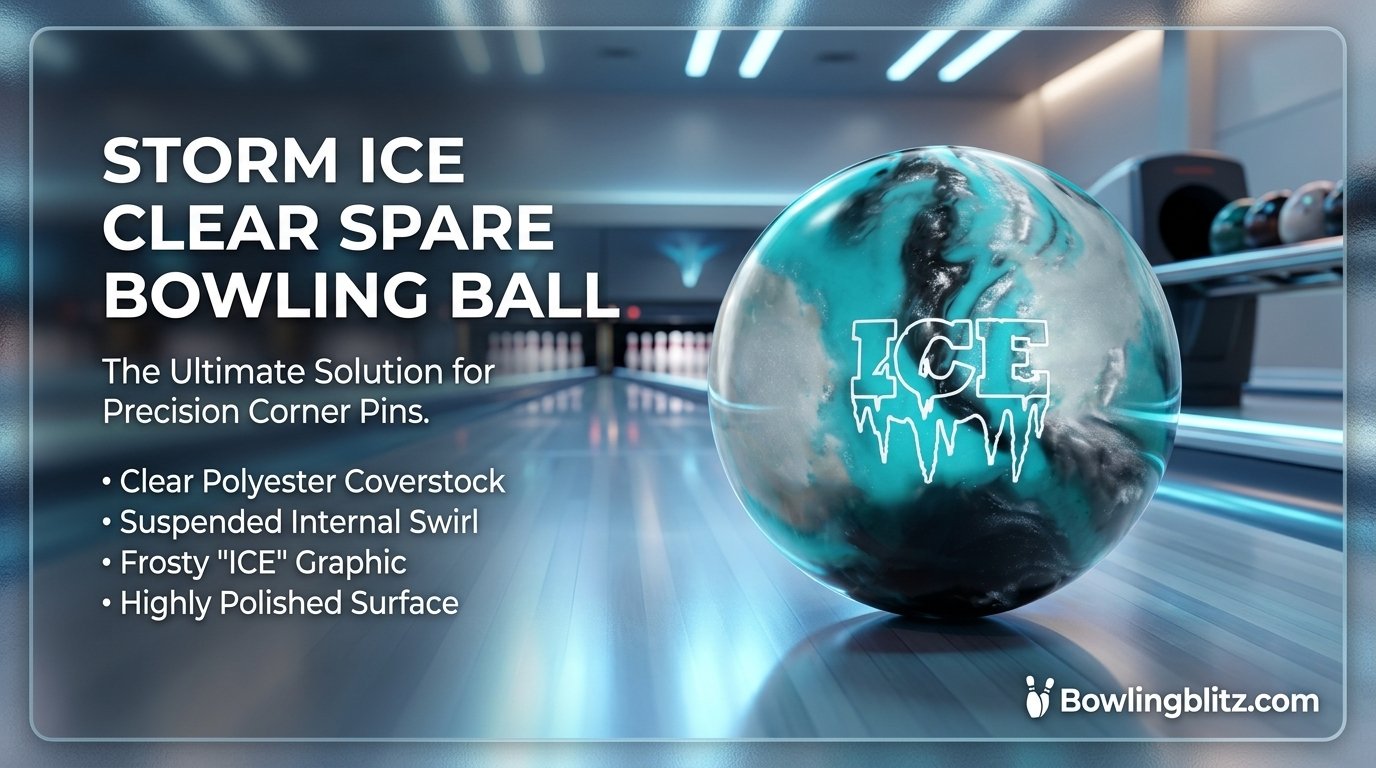
Storm Ice
Best Overall Spare BallStorm is best known for performance balls, which makes the Ice a bit of a quiet star in the lineup. It does one job and does it well. The translucent look gives it a distinct identity at the ball return, and the polyester shell rolls straight and clean from the moment it leaves your hand.
What we like about the Storm Ice is how normal it feels. There is no learning curve and no odd bounce. You point it at the pin, you release the way you always do, and it goes there. For bowlers who have been fighting with a strike ball on corner shots, that simplicity can feel like a revelation in the first league night.
It also carries the weight of a big-name brand, which means most pro shops are comfortable drilling it, and resale or replacement is easy if you ever want to switch. Check the listing for the weights and colors currently offered, since stock changes.
Pros
- Dependable straight roll
- Trusted brand and easy to find
- Looks different from most strike balls
Cons
- Sold in limited weights at times
- Not built to carry a full rack

Columbia 300 White Dot
Best Classic ChoiceIf bowling has an equivalent of a plain white T-shirt, the Columbia 300 White Dot is it. It has been a go-to spare ball for years, and you will see it in league bags across the country. The appeal is that nothing about it is complicated: it is a polyester ball built to roll straight, and it has never pretended to be anything else.
A white spare ball also has a practical advantage. It is easy to spot against the dark ball return, and many bowlers like the clean contrast between a white spare and a colorful strike ball. When you have a few seconds to pick up the right ball between frames, that kind of visual shortcut is useful.
Because it is so popular, pro shop staff know the ball well, and you can expect clear advice on layout and fit. It is a solid pick if you want something proven rather than flashy.
Pros
- Long track record as a spare ball
- Easy to see at the ball return
- Straightforward for pro shops to drill
Cons
- Plain look may not appeal to everyone
- White can show scuffs over time

KR Strikeforce Polyester
Best Budget-Friendly PickKR Strikeforce is one of those brands that tends to show up when people are looking for value, and the polyester spare ball is a good example of why. It gives you a polyester shell that rolls straight, a range of colors and a price that makes it easy to justify as a second ball in the bag.
The trade-off with budget options is usually consistency in fit and finish, so inspect the ball when it arrives. Look for a smooth surface without visible flaws, and have your pro shop check it before drilling. If it passes, it will do the same job as a more expensive plastic ball.
This is a good choice for newer bowlers who do not want to spend heavily on a spare ball yet, or for bowlers who simply believe that the best money in the game is spent on the strike ball.
Pros
- Pleasant on the wallet
- Straight, predictable roll
- Good for beginners and casual leagues
Cons
- Less brand recognition
- Worth inspecting on arrival
All three balls will make your single-pin shooting easier. If you can only pick one, the Storm Ice is the safe all-rounder, the Columbia 300 White Dot is the proven classic, and the KR Strikeforce is the budget route.
Looking for a straightforward polyester spare ball? See what is available.
Find a Polyester Spare BallReviews: Brunswick TZone Deep Space, Night Sky and MOTIV Aspire
Not every bowler wants a plain ball. If you like your equipment to look good as well as work, this group blends reliable plastic performance with real personality. The Brunswick TZone line in particular has been a favorite for years among bowlers who want a spare ball with some visual flair.

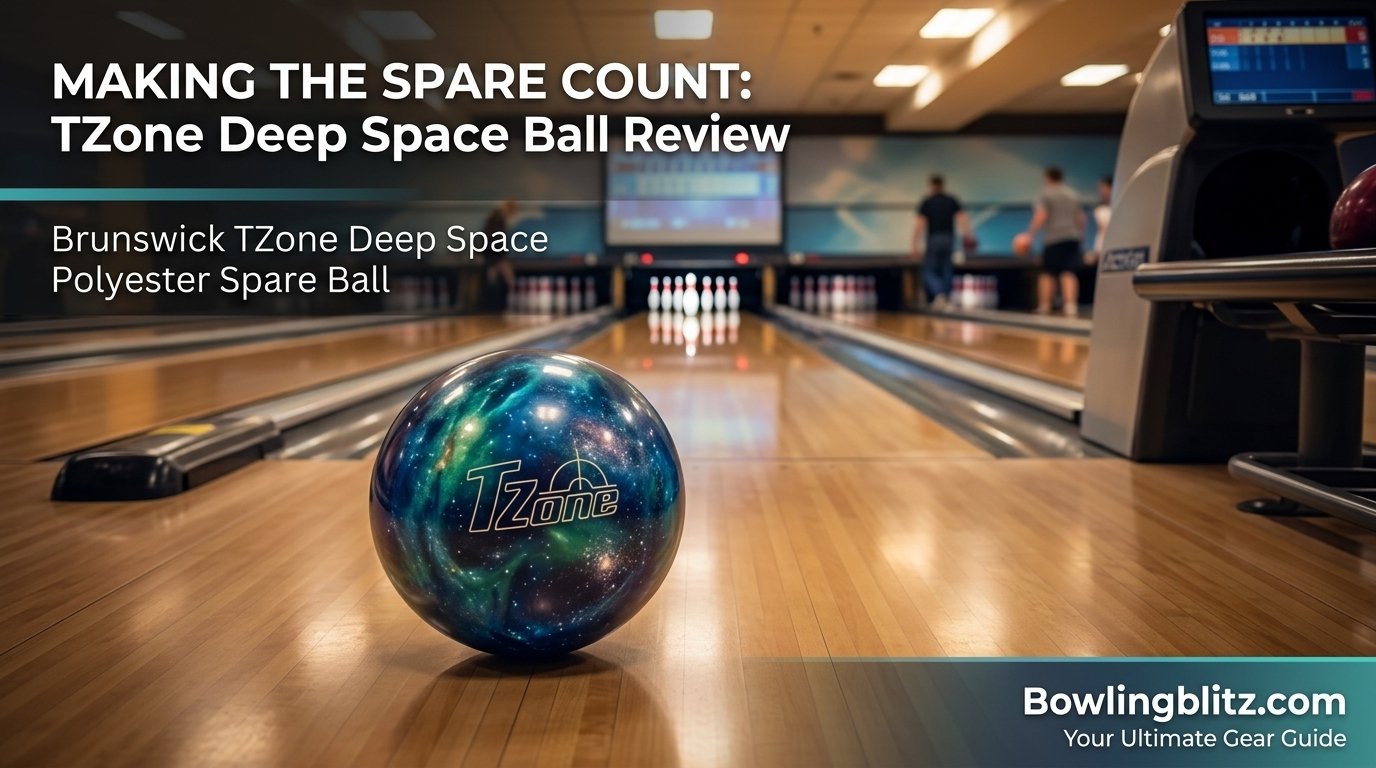
Brunswick TZone Deep Space
Best Style UpgradeThe Deep Space version of the TZone takes its inspiration from the night sky, with a swirling mix of colors that catches the light as it rolls. It is the kind of ball that gets comments at the lanes, and for bowlers who enjoy a bit of personality in their bag, that counts for something.
Beyond the looks, the TZone is a polyester ball built to roll straight, so the performance side is exactly what you would want from a spare ball. Brunswick has been making bowling equipment for a very long time, and the TZone line benefits from that experience. The shell is smooth and the ball tracks well off the hand.
If you are a newer bowler who wants something that can serve as a first ball and a spare ball down the road, the TZone also pairs well with the advice in our guide to the best bowling balls for beginners.
Pros
- Standout cosmic design
- Reliable polyester roll
- Trusted bowling brand
Cons
- Colorful designs vary by weight and batch
- Slightly higher cost than basic white plastic

Brunswick TZone Night Sky
Best for a Darker LookNight Sky is the moodier sibling of the Deep Space. It leans on darker tones with a starry feel, which suits bowlers who prefer a more understated but still distinctive look. If your strike ball is bright, a darker spare ball creates a clear contrast.
From a performance standpoint, it is the same TZone platform as the Deep Space, so you get the same smooth polyester surface and the same dependable roll. That means the choice between the two comes down to taste. Some bowlers like the busier look of the Deep Space, and others prefer the calmer feel of the Night Sky.
As with any darker ball, you may find it slightly harder to track visually on the lane, particularly in dim bowling centers. That is a minor point, but if you rely on watching your ball roll over your target, choose a color you can see.
Pros
- Stylish, subdued design
- Same predictable polyester roll
- Good contrast with brighter strike balls
Cons
- Dark finish can be harder to follow
- Not the cheapest plastic option

MOTIV Aspire
Best for Modern Brand FansMOTIV has built a reputation for performance balls, and many bowlers who love their strike balls like the idea of a spare ball from the same family. The Aspire fills that role, with a clean design and a roll that is meant to stay out of your way.
There is a small psychological benefit to matching brands in your bag. It makes the whole setup feel consistent, and for some bowlers that confidence matters. The Aspire gives you that without asking you to compromise on the basic purpose of a spare ball, which is to roll straight and forgive small errors.
Because MOTIV is known for premium equipment, check the listing carefully for current pricing and available weights. If the price is higher than a simple white polyester ball, decide whether the brand match is worth the premium to you.
Pros
- Pairs well with a MOTIV strike ball
- Clean, modern look
- Predictable on spare shots
Cons
- May cost more than generic plastic balls
- Fewer color choices
If you cannot choose between these three, ask yourself a single question: do you want your spare ball to disappear or to stand out? The TZone balls stand out. The Aspire sits quietly in your bag as part of a matching set.
Want a spare ball with some personality? Browse designs on Amazon.
Browse Brunswick TZone BallsReviews: ELITE Star Polyester and Hammer Black Widow Viz-a-Ball
This pair sits at opposite ends of the personality scale. One is a friendly, value-oriented ball with a bright pattern, and the other is a showpiece for bowlers who want people to notice the equipment before they notice the score.

ELITE Star Polyester
Best for Fun on a BudgetThe ELITE Star is built around a simple idea: a spare ball does not need to be expensive to be useful. It gives you a polyester shell, a lively star-themed look and a price that keeps the total cost of a second ball in a sensible range.
Because it is made from polyester, it behaves the way you want a spare ball to behave. It rolls with little hook, it skids through the oily part of the lane and it holds a line to the corner pins. For house league bowlers, families who bowl together and casual players who want a ball they can drill once and use for years, that is enough.
As with other budget-friendly options, have your pro shop look it over before drilling. Most buyers will have no issues, and the visual appeal of the ball is a nice bonus when you are trying to recognize your spare ball in a crowded rack.
Pros
- Friendly price
- Fun, easy-to-spot design
- Good for kids and casual bowlers
Cons
- Lesser-known brand
- Limited weight and color options at times

Hammer Black Widow Viz-a-Ball
Best Showpiece Spare BallHammer builds balls with attitude, and the Black Widow Viz-a-Ball is a good example. It is designed to look striking, which is exactly why some bowlers buy it. If you want a ball that makes a statement at the lanes, this one does.
Look past the design and you get a spare ball that is meant to roll in a direct line. That makes it a perfectly reasonable choice for single-pin shots, particularly if you like the idea of a ball with a bit of theater to it. Spare shooting does not have to be dull, and a ball you enjoy using can improve your focus.
Since the look is the main attraction, it is worth reading the listing carefully to confirm weight and finish before you order. Fancy finishes sometimes require a little extra care, so wipe the ball down after each session to keep it looking sharp.
Pros
- Bold, attention-grabbing look
- Straightforward polyester behaviour
- Backed by a performance-focused brand
Cons
- Style may cost more than plain plastic
- Fancy finish may need extra care
See more polyester options in different colors and weights.
Browse Colorful Spare BallsUrethane Spare Balls: Storm Mix and Hammer Axe
Most spare balls are plastic, but a growing number of bowlers prefer urethane. It gives you a little more grip and a little more pin action, while staying far more controlled than reactive resin. If you have ever left a corner pin standing because your plastic ball deflected off it without moving it enough, urethane is worth considering.
Why choose urethane for spares?
A urethane ball holds onto the lane a bit more than polyester. On drier boards, it will arc gently, and that arc can help you angle in toward a corner pin without overthinking the shot. It also transfers energy to the pins differently, which can help carry a pin into its neighbors on multi-pin leaves.
It does come with a small learning curve. A urethane ball will not run perfectly straight in every situation, so you need to account for lane condition. On heavy oil, it will skid and behave like plastic. On dry lanes, it will start to curve earlier. The right way to treat it is as a ball that gives you a modest, predictable arc rather than a ball that you can ignore completely.

Storm Mix (Urethane)
Best Urethane Spare BallThe Storm Mix is a urethane ball that brings together the control bowlers like from a spare ball and the extra bite that makes urethane interesting. It is the kind of ball you can use for spares, and on some conditions it is also a viable strike option when the lanes are dry.
Because it is a urethane ball, it reacts to friction more than a polyester ball does. That gives you a bit more margin on certain shots, and it can help when you need the ball to drive through a pin cluster. It is also durable. Urethane tends to hold up well over time, and it is less sensitive to oil absorption than reactive resin.
If you already use a Storm ball for strikes, the Mix is a natural companion. The brand is familiar to pro shops, and you can ask for a layout that matches your hand while keeping the ball predictable on spare shots.
Pros
- More pin action than plastic
- Durable urethane shell
- Useful on dry lanes
Cons
- Less straight than polyester on dry boards
- Typically costs more than plastic

Hammer Axe (Urethane)
Best for Bold Urethane FansHammer pairs urethane performance with a design that looks like it means business, and the Axe is a good example. Like the Storm Mix, it offers more grip than plastic while staying in the controlled end of the performance range.
For bowlers who like having a heavier-hitting spare ball, the Axe gives you a little extra reaction at the pins, and its urethane shell can help you move stubborn leaves. It is a good option if you are working on your game and want to experiment with how urethane responds at different parts of the lane.
As always, the best use of a ball like this is to match it to your lane conditions. On fresh oil it will glide straight, and as the oil breaks down through the night, it will start to show its arc. Learning that pattern is part of the fun.
Pros
- Urethane hit with a bold look
- Good control for the grip it offers
- Reliable construction
Cons
- Needs lane-condition awareness
- More expensive than basic plastic
A note for newer bowlers: if you are still building the basics of your delivery, start with polyester. It lets you focus on your target and release without adding a second variable. Move to urethane when your spare shooting is solid and you want to fine-tune pin carry.
Interested in a urethane spare ball? Compare options on Amazon.
Shop Urethane Bowling BallsWeight, Drilling and Cost: Getting the Fit Right
A good spare ball in the wrong weight or with the wrong drilling is worse than an average ball that fits properly. This is where many bowlers waste money, so it is worth getting the details right.
Choosing the right weight
The usual starting point is to match your spare ball weight to your strike ball weight so your arm swing feels the same on every shot. Plenty of bowlers do exactly that. Others go a pound or two lighter, because a lighter ball is easier to control at a slower speed and puts less strain on the arm over a long session. Both approaches work, and the right answer depends on your comfort.
Avoid going dramatically lighter than your strike ball. A very light ball can bounce off pins and deflect awkwardly, which defeats the purpose. If you do not yet know what weight suits you, our article on what weight bowling ball you should use offers guidelines you can test at the lanes.
Why proper drilling matters
A pro shop will measure your hand and drill the ball so the span, grip and finger pitch match how you hold it. Even for a simple spare ball, this is important. A ball that is too tight on the thumb causes you to squeeze, and a ball that is too loose causes you to grip, and both create inconsistent releases.
When you take your spare ball to be drilled, mention that it is a spare ball. The driller can choose a conventional layout that keeps the ball rolling straight. If you are curious about where to take it and how to compare options, our guide to where to buy bowling balls covers pro shops, online retailers and sporting goods stores.
Understanding the full cost
The purchase price is only part of the cost. Drilling usually adds a fee, and you may want accessories such as a ball towel, a wrist support or a bag with space for a second ball. Many bowlers also buy a small bottle of ball cleaner. The total is still often lower than buying one performance strike ball, but it is better to know what to expect. Our bowling ball cost guide breaks down the typical spread across ball types.
| Cost item | What to expect | Worth it? |
|---|---|---|
| Spare ball purchase | Low for plastic, moderate for urethane | Yes, it is the core purchase |
| Drilling fee | Modest, set by your pro shop | Yes, fit is essential |
| Bag with second-ball space | Varies by style | Helpful for carrying two balls |
| Cleaner and towel | Small | Yes, keeps the surface consistent |
Always check current pricing on the listing instead of relying on rough numbers, since costs vary by seller, weight and design.
Buying online versus in a pro shop
Buying online gives you a wider selection and often a lower price. Buying in a pro shop gives you hands-on advice and often free or discounted drilling when you purchase the ball there. If you are comfortable with your weight and brand preference, ordering online and taking the ball to a shop is a perfectly good route. If you are unsure, start in the shop.
Choose your weight and order a spare ball ready for drilling.
Find Your Weight on AmazonHow to Shoot Spares With Your Spare Ball
Buying the right ball is half the job. The other half is learning how to use it. Spare shooting is one of the most learnable skills in bowling, because it relies on geometry and repetition rather than raw power. A few simple habits can raise your conversion rate quickly.
Know the pin layout
The ten pins sit in a triangle, numbered from the front. The head pin is the 1. The second row holds the 2 and 3, the third row the 4, 5 and 6, and the back row the 7, 8, 9 and 10. From the bowler’s view, the 7 is the back-left corner and the 10 is the back-right corner. Knowing these positions by number helps you read your leave quickly and pick the right line. If you enjoy the history and trivia behind the game, our collection of bowling pin facts is a fun detour.
Use the cross-lane principle
The most reliable way to shoot corner pins with a straight ball is to cross the lane. For a right-handed bowler, that means standing on the left side of the approach to shoot at the right-side pins, and on the right side of the approach to shoot at the left-side pins. Left-handers mirror this. Crossing the lane gives you a longer, safer angle toward the corner and reduces the chance that the ball drifts into the gutter.
| Leave | Right-hander starting point | Aim idea |
|---|---|---|
| 10-pin (right corner) | Left side of the approach | Angle across toward the right corner, hitting the pin on its near side |
| 7-pin (left corner) | Right side of the approach | Angle across toward the left corner, hitting the pin on its near side |
| 4-pin or 2-pin (left side) | Right of center | Cross toward the pin, aiming slightly on its inside edge |
| 6-pin or 3-pin (right side) | Left of center | Cross toward the pin, aiming slightly on its inside edge |
| 5-pin, 8-pin or head pin | Near your strike starting spot | Roll straight through the target |
Treat these as starting points rather than strict rules. Every bowler has a slightly different release, and every lane plays a bit differently. The goal is to find a reliable position for each leave, remember it, and repeat it.
Aim at a spot, not at the pin
Elite bowlers rarely stare at the pins. They look at the arrows or markers on the lane a few feet in front of the foul line and roll the ball over that spot. It is far easier to hit a target ten or fifteen feet away than a pin sixty feet away. Pick the arrow that lines up with the pin you want, step to the correct starting position, and focus on your target.
Keep your delivery the same
Resist the urge to throw the ball harder or softer for spare shots. Use the same tempo and release as your strike delivery. If you change your speed, you change your line. A smooth, repeatable swing is the whole reason the spare ball works.
Handle common leaves with a plan
- Single pins: use the cross-lane approach and trust your target.
- Two-pin combinations: aim for the pin that will send the other one into its partner, which is often the one closer to you.
- Splits: pick the pin that gives you the best chance of a chain reaction, but do not be afraid to simply aim for the larger gap and make the cleanest shot you can.
- Washouts and big leaves: with a plastic ball, strong contact on the first pin matters more than anything. Aim for the middle of the lead pin and let the ball do its work.
Practice tip: spend ten minutes before league night throwing at the corner pins from your usual spots. Setting up your 10-pin and 7-pin shots in advance gives you a library of positions to fall back on when a real leave appears.
Build a pre-shot routine
Even a short routine helps. Take a breath, set your feet on your chosen starting board, look at your target arrow, and swing. When you walk through the same sequence every time, you free your mind from last frame’s mistake and focus on the pins in front of you. Over weeks of league nights, that routine becomes second nature, and you start converting the shots that used to cost you.
Add a dedicated spare ball to your bag and start closing out frames.
Shop Plastic Spare BallsPlastic vs Urethane Spare Balls: Which Should You Pick?
You have seen both options in this list. Now let us make the decision easier. Neither choice is wrong. It comes down to your game, your lanes and how much tuning you want to do.
| Factor | Plastic (polyester) | Urethane |
|---|---|---|
| Path down the lane | Nearly straight | Straight on oil, gentle arc on dry boards |
| Ease of use | Very easy | Easy once you learn the arc |
| Pin action | Moderate | Better on tricky leaves |
| Price | Lower | Moderate |
| Durability | Very durable | Very durable |
| Best for | Beginners and straight-line spare shooters | Experienced bowlers who want more control over carry |
Choose plastic if you…
- Want the simplest, most forgiving spare ball.
- Bowl on lanes that are heavily oiled or inconsistent.
- Are a newer bowler building a reliable delivery.
- Prefer to spend less and put your money into your strike ball.
Choose urethane if you…
- Already shoot spares well and want better pin carry on awkward leaves.
- Bowl on drier lane conditions, where plastic can feel skittish.
- Are comfortable adjusting your line for a gentle arc.
- Like the idea of a ball that doubles as a backup strike ball on very dry lanes.
A practical recommendation
If you are not sure, buy a polyester ball first. It is inexpensive, it is easy to use, and it teaches you what a straight roll feels like. You can always add a urethane ball later for specific conditions. Our guide on choosing a bowling ball goes deeper on how to build a bag over time.
Another way to think about it is that plastic is the better teacher and urethane is the better tool for experienced hands. Plastic will tell you quickly whether your release is clean. If your plastic ball drifts away from the target, the problem is in your swing or your starting position, not in the ball. That honest feedback is valuable, and it is why many coaches recommend it to developing bowlers.
Compare plastic and urethane spare balls side by side.
Compare Plastic and UrethaneCare, Buying Tips and Common Mistakes
A spare ball does not ask for much, but a little care keeps it consistent and extends its life.
Simple care habits
- Wipe it down after every session. A microfiber towel removes oil and dirt before they dry on the surface.
- Use a cleaner now and then. A ball cleaner helps keep the surface smooth so it rolls the same way each time.
- Avoid temperature extremes. Leaving a ball in a hot car or freezing garage can affect the shell over time. Keep it in your bag at room temperature.
- Inspect the finger holes. If you see cracks or chips around the holes, have your pro shop check them.
- Wear proper bowling shoes. Good footwear protects the approach and your balance, and balance is what protects your spare shooting.
Smart buying tips
- Confirm the material in the product description before ordering.
- Check that the weight you need is in stock.
- Read recent reviews for notes about finish quality and shipping condition.
- Look at the return policy in case the ball arrives damaged.
- Plan your drilling appointment before you buy so you can get the ball ready quickly.
Common mistakes to avoid
- Buying a spare ball in a weight you cannot control. Fit and comfort beat any feature.
- Skipping the drilling. A pre-drilled ball that does not fit your hand creates tension and inconsistent releases.
- Using the spare ball for strikes. A plastic ball can hit the pocket, but it will not carry the pins well. Keep each ball in its role.
- Changing your delivery on spares. A spare ball only works if your swing stays the same.
- Forgetting to practice. A good ball helps, but repetition builds the skill.
- Overspending. You do not need to buy the most expensive option. A solid plastic ball does the job.
Avoid those pitfalls, and your spare ball will quietly pay for itself in saved pins. Better equipment also pairs nicely with the right footwear, which is covered in the related reads at the end of this guide.
Final tip: give your new spare ball a few sessions before judging it. It takes a little time to learn your starting spots and trust the roll. Most bowlers feel the improvement within a handful of games.
Grab a ball cleaner and towel to keep your spare ball rolling true.
Shop Bowling Ball CareFrequently Asked Questions About Spare Bowling Balls
Do I really need a separate spare ball?
You do not need one, but it helps. A spare ball rolls straight and predictably, which makes single-pin shots easier than they are with a hooking strike ball. Most league bowlers who add one see better spare conversion within a few weeks.
What is the best material for a spare ball?
Polyester, often called plastic, is the standard because it rolls with very little hook. Urethane is a good alternative if you want slightly more grip and pin action while keeping control.
Can I use my strike ball for spares?
Yes, and many bowlers do. The downside is that a reactive-resin ball changes direction depending on the lane, which makes corner pins harder to hit consistently. A dedicated spare ball removes that variable.
What weight should my spare ball be?
Most bowlers match their strike ball weight so their swing feels the same. Some prefer a pound or two lighter for comfort. Pick a weight you can control through a full session, and see our guide on choosing the right weight for more help.
Should the drilling match my strike ball?
Many bowlers keep a similar span and grip so the ball feels familiar, but a pro shop can advise the best layout for a spare ball. The key is that the holes fit your hand comfortably.
Is urethane better than plastic for spares?
It depends on your game. Urethane offers more pin action and a gentle arc on dry lanes, while plastic is simpler and more forgiving. Beginners usually do best with plastic, and experienced bowlers sometimes prefer urethane.
How much does a spare ball cost?
Plastic spare balls are generally among the most affordable bowling balls, and urethane balls tend to cost a bit more. Add a drilling fee and a few accessories. For a closer look, read our guide to how much a bowling ball costs.
Do spare balls hook at all?
A polyester ball hooks very little, and often not at all on oily lanes. A urethane ball can arc gently on dry lanes. Neither hooks as sharply as a reactive-resin strike ball.
Can a beginner use a spare ball as a first ball?
Yes. A plastic ball is a very common first purchase because it is simple, durable and inexpensive. You can add a strike ball later as your game grows. Our list of the best bowling balls for beginners has more ideas.
How do I clean a spare ball?
Wipe it with a clean towel after each session, and use a bowling ball cleaner when it looks dull or dirty. Plastic is easy to maintain because it does not absorb oil the way reactive resin does.
When should I replace my spare ball?
Replace it if you find cracks, deep chips or finger-hole damage, or if your hand has changed and the fit no longer feels right. Otherwise a good plastic ball can last for years.
Should I buy a pre-drilled spare ball?
It is usually better to buy undrilled and have a pro shop fit it to your hand. A ball drilled for an average hand rarely suits an individual bowler well. You can compare buying routes in our guide on where to buy bowling balls.
Conclusion: Pick Up More Spares With the Right Ball
Strikes get the glory, but spares decide the score. A dedicated spare ball is one of the cheapest and most effective upgrades you can make, because it replaces a guessing game with a straight line. Whether you choose a classic like the Storm Ice or Columbia 300 White Dot, a stylish Brunswick TZone, a budget-friendly KR Strikeforce or ELITE Star, or a urethane ball like the Storm Mix or Hammer Axe, the key is to pick a ball you trust, have it drilled to fit your hand and use it with the same smooth swing every time.
Start with polyester if you are unsure, add urethane when you want more pin action, and give yourself a few sessions to learn your starting spots. The pins you pick up will add up faster than you expect. Ready to choose? Take a look at the options below and get your spare ball ordered.
Find the spare ball that fits your game and start converting more frames.
Shop Spare Bowling Balls on Amazon