Why Are Bowling Shoes Different? The Real Reasons Behind That Odd Pair
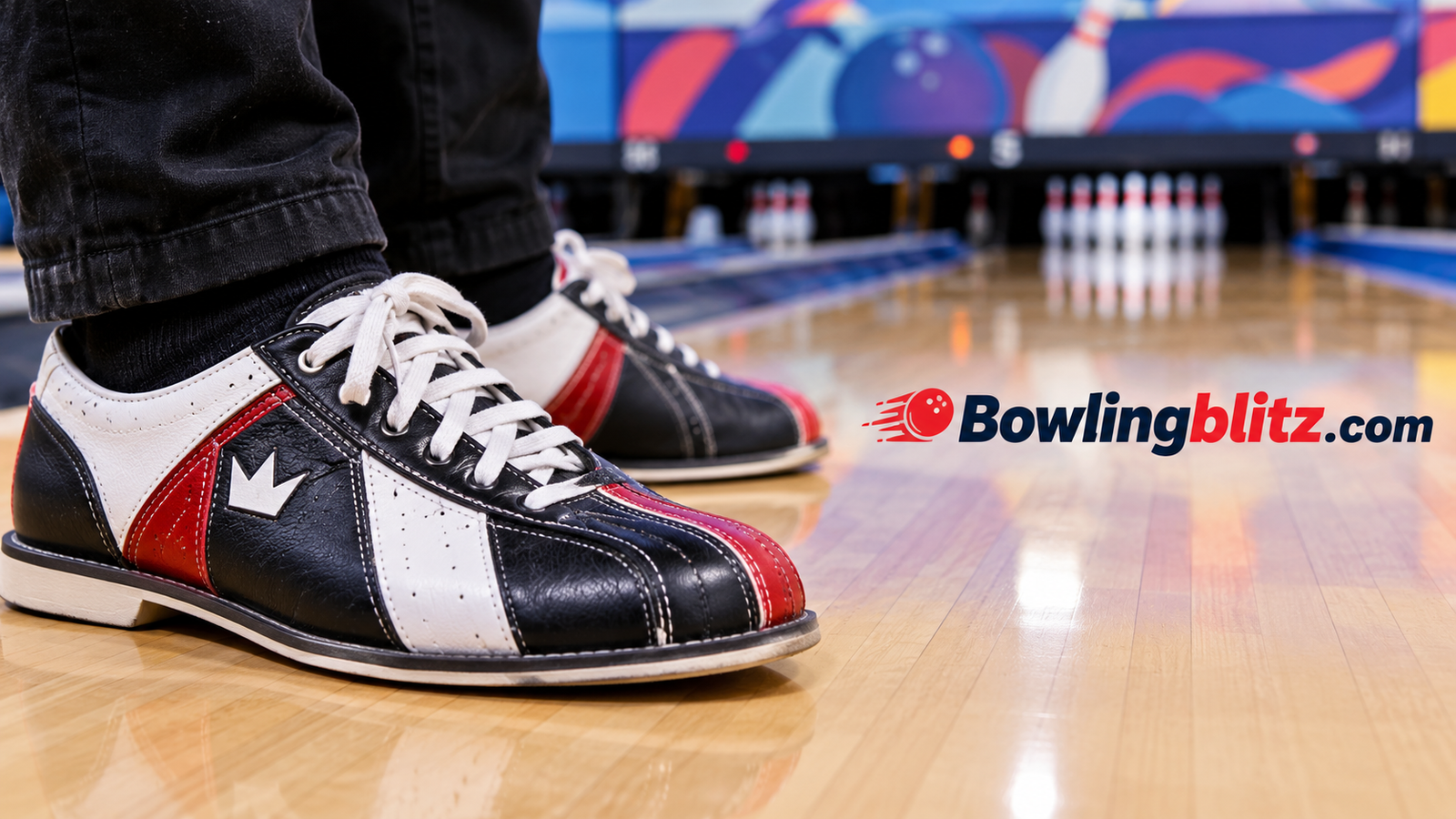
Walk into any bowling alley and you’ll notice the shoes before the lanes: two-tone, a little retro, and almost comically distinct from anything in your closet. They aren’t a fashion statement. Every design choice, from the slick sole to the soft heel, solves a physical problem that comes with throwing a heavy ball down a polished wooden or synthetic lane. Here’s what makes them different and why it matters for your game.
The Short Answer
Bowling shoes are built to slide, not grip. Regular athletic shoes are engineered for traction, which is the opposite of what you need on an approach. A bowler takes a few steps and glides to a stop at the foul line; a shoe that sticks would yank your body sideways, wreck your balance and risk a fall. Bowling shoes also protect the approach surface, which is oiled, finished and expensive to maintain.
Think about what a bowler actually does. You carry a ball that can weigh up to sixteen pounds, take a rhythmic walk of four or five steps, swing the ball back and forward, and then release it while your body is still moving. The final movement is a slide, and the quality of that slide shapes where the ball starts, how fast it travels and how much it rotates. A shoe that fights the slide fights the shot.
That is the heart of the answer. Bowling shoes are specialized tools, much like cleats in soccer or climbing shoes on a wall. Each sport asks the feet to do a specific job, and the shoe is engineered around it. In bowling that job is to let you decelerate smoothly and finish balanced, so every delivery looks and feels the same.
Three jobs in one shoe
A bowling shoe has to do three things at once: provide a controlled glide, offer reliable traction where you need it, and keep the approach clean. Most of the odd details you notice, from the two-tone soles to the flat, wide heel, trace back to one of those three goals. The sections below break each one down so you know exactly what you are paying for when you rent or buy.
Ready for a pair that actually slides right?
Shop Bowling Shoes on AmazonThe Sliding Sole
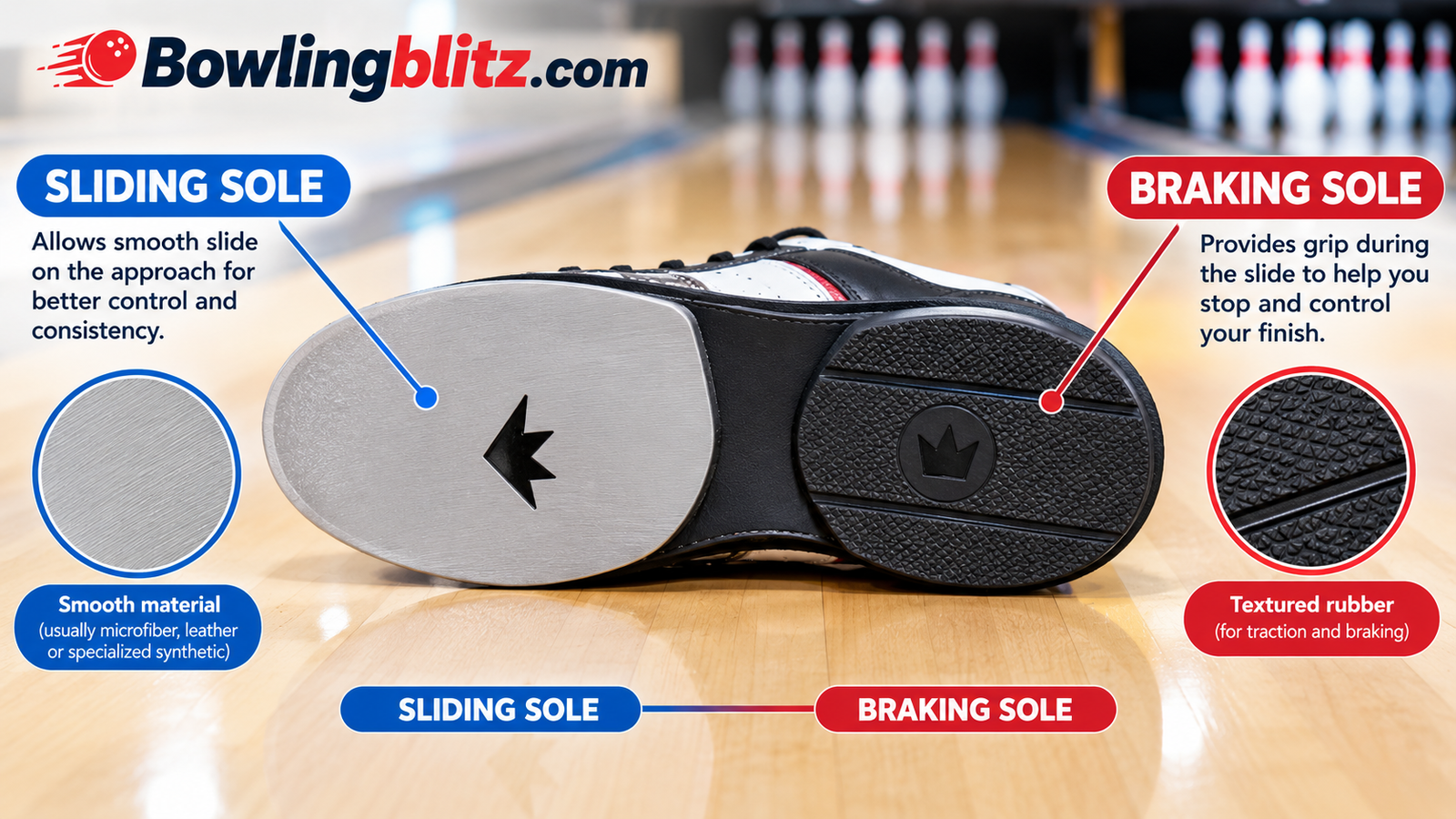
Your sliding shoe, the left for a right-handed bowler, has a smooth sole made of leather, felt or a smooth synthetic. That surface lets your foot glide the last few feet of your delivery, so your body decelerates naturally while the ball swings through. Without that slide, your momentum has nowhere to go, and the shot suffers.
Many shoes are marked with a letter or label for which foot slides, and this is why some models come as left-hand or right-hand specific.
Slide soles are designed around friction, and they use the right amount of it. Too little friction and you skate out of control past the foul line. Too much and your foot catches, jerking your hips and shoulders off line. Leather offers a medium, predictable slide. Felt is slicker and often found on higher-end models. Smooth synthetic pads sit somewhere in between and tend to resist wear well.
The ideal slide is about the length of your final stride, a few feet, ending right at the line without drifting. You want your knee bent, your shoulders square and your balance held through the finish. That position is nearly impossible if your sole is sticking or skating unpredictably.
Lane conditions change the slide
Humidity, temperature and the condition of the approach all affect how a sole behaves. On a dry approach, a slick sole may feel too fast. On a damp one, the same sole may feel sticky. That is exactly why serious bowlers carry different slide pads or choose shoes with swappable soles. For a casual night out, a standard slide is fine. If you notice yourself sticking, stopping short, or sliding too far, the sole is usually the cause, not your technique.
Also remember that sliding shoes are meant to be used on the approach only. The moment you walk across carpet or a sticky floor, you can pick up debris that ruins the glide.
Sole materials compared
Not every sliding surface behaves the same way. The table below shows how the common options differ so you can match a sole to your style and your home center.
| Material | Slide Speed | Best For | Watch Out For |
|---|---|---|---|
| Leather | Medium, predictable | Everyday bowlers and leagues | Can glaze with heavy use |
| Felt | Fast | Bowlers who tend to stick | Wears quickly on rough approaches |
| Suede | Medium to slow | Dry or fast approaches | Needs brushing to keep texture |
| Smooth synthetic | Medium | Durability and low upkeep | Less adjustable feel |
If you are unsure, start with leather. It is the most forgiving option, and you can experiment with other pads later once you understand how your slide behaves.
Compare sliding-sole designs.
View Options on AmazonThe Braking Sole
Your push-off foot needs the opposite: some grip. It typically has a rubber sole that lets you plant and drive without skidding. On the approach, that foot starts the push-away and anchors your first steps, so it needs traction while the other foot needs glide. It’s a split personality built into one pair, and it’s the main reason bowling shoes feel strange the first time you wear them.
| Foot | Sole Type | Job |
|---|---|---|
| Sliding foot | Leather, felt or smooth synthetic | Glide to a controlled stop at the line |
| Push-off foot | Rubber or grippy material | Stable footing during approach steps |
The braking sole is the unsung hero. Rubber or a similar high-friction material lets your push-off foot grip the approach and stay stable while your other foot is preparing to slide. When you take your first step with the opposite foot, the grippy foot keeps your base solid. Without it, you could slip backward during the push-away, particularly with a heavier ball.
Many bowlers do not notice the braking sole because it simply works. But try bowling with two slick soles and you will feel it immediately. Your steps become tentative, your timing shifts, and your balance gets shaky. The shoe is quietly doing a lot of work.
Why rubber heels matter too
Some shoes have a rubber heel on the sliding foot as well. A heel with grip helps you stop quickly if you need to, such as when a ball return or another bowler distracts you. Others use a softer heel that slides a little for added flexibility. This is a matter of personal preference and the style of bowler you are, but it explains why even two shoes with similar looks can feel completely different once you start walking.
Find shoes with the right grip and glide balance.
Browse on AmazonProtecting the Lane
Lane surfaces are coated with carefully measured oil patterns and finish. Street shoes carry grit, moisture, grease and tiny abrasives that scratch the approach and drag contaminants onto the boards. Even a little residue changes how a bowler slides, and dirty approaches affect everyone. Bowling centers insist on dedicated shoes partly for this reason: clean soles keep the approach consistent and the lanes in good condition.
A bowling lane is not just a long wooden or synthetic floor. The approach, the area behind the foul line, is carefully finished, and the lane itself is conditioned with oil in particular patterns. Staff spend considerable time maintaining that surface so it plays fairly. When shoes bring in outdoor dirt, small stones or sticky residue, they leave marks that change how everyone slides.
Even liquids are a concern. A drop of soda or a damp patch from a wet shoe can become a hazard for the next bowler. Because approaches are meant to be slick, a small contaminant can turn into a slip risk or a stuck foot at the worst moment. Keeping outside shoes off the approach is a small rule with a big effect.
Lane etiquette goes with the shoes
Good manners reinforce the rule: do not wear bowling shoes outside, do not walk on the approach in street shoes, and do not carry drinks onto the approach. Wipe your sole on a clean cloth if you notice anything sticky. These habits protect the lane and your own game. Anyone who has stuck a foot on a dirty approach knows how quickly a good shot can turn into a stumble.
Centers also care about their equipment. A damaged approach costs time and money to repair, which is why shoe policies are usually strictly enforced.
Keep your own clean pair ready.
Shop NowWhy Rental Shoes Look So Strange
Rental shoes are made for durability and universal use. The bold color schemes make them easy to spot if one walks out the door, and the soles are usually designed so either foot can slide, which is why a rental pair feels slick on both sides. That’s convenient for a whole alley of different bowlers, but it’s a compromise. A shoe built for everyone is rarely ideal for anyone, which is why serious bowlers eventually buy their own.
Rental shoes have a tough job. They need to fit a wide range of people, survive heavy use and be easy to clean and sanitize. That is why they use durable materials, simple designs and conspicuous colors. The classic red, tan and blue patterns are not about style at all; they are about recognition and durability.
Most rental pairs use a universal sole with slide material on both feet. This lets any bowler, left-handed or right-handed, use the same pair without thinking. It is a practical solution, but it means the shoe cannot be perfectly optimized for either foot. Beginners rarely notice the difference. Experienced bowlers often do.
Sizing and hygiene
Rental sizes are usually printed on the heel, and many centers use a standard sizing chart that may differ from your sneakers. If a pair feels too big or too small, ask for another size rather than tolerating a poor fit. As for hygiene, centers typically spray or treat shoes between uses, but many bowlers still prefer their own pair for comfort and peace of mind.
If you are just getting started, rentals are a smart low-cost way to learn. Use that time to figure out your preferences, then decide whether buying a pair makes sense.
Common myths about bowling shoes
Myth: Any smooth-soled shoe works. A flat dress shoe or a worn sneaker might feel slick, but the slide is unpredictable. Bowling shoes use materials chosen for a consistent, controlled glide, and that consistency is what makes a delivery repeatable from frame to frame.
Myth: Shoes only matter for serious bowlers. Even a casual player benefits from proper footwear. A stable slide reduces the chance of a fall, protects your knees and makes the game more enjoyable. You do not need to be competitive for your feet to deserve the right tool.
Myth: Rental shoes are always unhygienic. Most centers sanitize rentals between uses, and many bowlers wear them without any issue. Still, personal shoes offer extra comfort and peace of mind, particularly if you bowl often or have sensitive feet.
Myth: A heavier ball means you need different shoes. Ball weight does not change the basic shoe design, but heavier balls put more force through your slide leg, so good support and a well-fitted shoe matter even more. If you are still deciding on weight, our guide on choosing the right ball weight is a handy reference.
Myth: New shoes need no break-in. Some do, especially leather models. Wear a new pair for a few practice frames before an important league night so you know how the slide and fit behave. Small adjustments, like a slightly different lacing pattern, can make a noticeable difference.
Clearing up these misunderstandings helps you shop with confidence. When you know what the shoe is actually doing for you, it is much easier to decide which features are worth paying for and which you can skip.
Outgrown the rentals?
See Beginner Picks on AmazonLeather vs. Synthetic Uppers
Leather breathes, molds to your foot and lasts for years, but costs more and needs care. Synthetic uppers are lighter, cheaper and easy to wipe clean, though they may not stretch or ventilate as well.
Leather
- Molds to your foot
- Long lifespan
- Premium look
Synthetic
- Lower price
- Lightweight
- Easy to clean
The upper, the part that wraps your foot, affects comfort and durability more than most people expect. Leather is the traditional choice. It flexes with the foot, handles repeated movement and develops a personalized fit over time. Quality leather uppers can last for years if they are cared for properly.
Synthetic materials, including microfiber and mesh panels, have improved dramatically. They are lighter, dry faster and are often cheaper. Some bowlers prefer them for breathability, especially in warm centers or during long leagues. The tradeoff is that synthetics can feel less supple and may show wear sooner depending on quality.
Which one should you pick?
If you bowl weekly or compete, leather is usually worth the extra investment because of the fit and longevity. If you bowl occasionally or want an inexpensive first pair, synthetic is a great choice. Either way, look for reinforced stitching around the toe and a secure lace or strap system. A good upper holds your foot steady during the slide, which is what you actually care about.
Weight matters, too. A heavy shoe can feel tiring over multiple games, so compare options if you often bowl long sessions.
Compare materials side by side.
Check Leather OptionsInterchangeable Soles and Heels
Advanced shoes let you swap sliding soles and heels to match lane conditions. A drier or stickier approach may call for a slicker sole, and a humid center may need the opposite. Different slide pads, from quick to controlled, let you fine-tune your finish. If you’re just starting out, a simple fixed pair does the job; adjustable models reward bowlers who play different centers regularly. Our guide to the best bowling shoes covers the strongest adjustable and non-adjustable options.
Performance bowling shoes take customization seriously. Many models include slide soles in several grades, often labeled by speed, such as quick, medium and slow. A slower sole helps if you tend to slide too far; a faster one helps if you stick. Heels can also be swapped to fine-tune your stopping behavior.
This flexibility is useful if you bowl in different centers. One alley may have a dry approach and another a humid one, and a single fixed sole cannot cover both. Swappable parts let you adapt without buying an entirely new pair.
Is it worth the extra cost?
For casual bowlers, probably not. A well-made fixed-sole shoe will do everything you need. For league bowlers and those chasing consistency, interchangeable systems are a smart upgrade. They also extend the life of the shoe because you can replace worn parts instead of the whole pair.
When shopping, check how the soles attach. Velcro and snap systems are the most common, and each has its own feel and durability. Read reviews carefully to see how the parts hold up after months of use.
Want adjustable soles?
Shop Interchangeable ShoesFit and Comfort
Bowling is repeated lunging and sliding, so a proper fit matters. Too loose and your foot shifts inside during the slide, hurting accuracy; too tight and your toes pay for it by game three. Bowling shoes often run a half-size different from your sneaker size, so try before committing when you can. Good cushioning, a supportive footbed and a secure lacing or strap system keep your delivery repeatable.
Comfort in a bowling shoe is not the same as comfort in a running shoe. You are not logging miles; you are making a precise, repeated movement. The shoe should feel secure, with no heel lift and no pressure on the toes. A snug midfoot keeps your foot from shifting during the slide, which protects both accuracy and joints.
Look for cushioned insoles and supportive arches. Bowling puts stress on the ankles and knees, especially the sliding leg, so good support makes a real difference over a long session. Breathable linings help too, because feet get warm during multi-game nights.
Getting the size right
Try shoes on with the socks you plan to bowl in. Walk, lunge gently and check for slipping. If you have wide or narrow feet, look for dedicated width options instead of forcing a standard size. Remember that leather may relax a little with wear, while synthetics usually keep their original shape.
Women’s and men’s models sometimes differ in last shape and sizing, so check the size chart before ordering. A good fit makes the rest of your equipment, from your ball to your grip, work better too.
Quick fit checklist
Use this table when you try on a pair, whether in a store or at home with a return policy.
| Check | Good Sign | Red Flag |
|---|---|---|
| Heel | Stays planted when you step | Lifts or rubs with each stride |
| Toes | Slight wiggle room | Pressed against the front |
| Midfoot | Snug but not pinching | Foot slides side to side |
| Lunge test | Foot stays steady | Foot shifts inside the shoe |
If a shoe fails more than one of these checks, move on. A bad fit shows up as soreness in the arches, blisters on the heel, or a slide that feels off no matter how you adjust.
Wide, narrow or standard fits available.
Find Your FitWhy Street Shoes Don’t Work
Sneakers are designed to grip floors, which is dangerous on an approach. Rubber soles can catch mid-slide, twisting your knee or ankle. Meanwhile, dress shoes with leather soles can be inconsistent and slick in unpredictable ways. Bowling shoes give you a controlled, repeatable slide, which is the foundation for a repeatable shot. Once you have the footwear right, move on to equipment such as the right bowling ball and the correct ball weight.
Street shoes create two separate problems. First, athletic sneakers have rubber outsoles that grab surfaces, which is the opposite of what a slide needs. If your front foot sticks during delivery, your lower body stops abruptly while your upper body keeps moving. That is a recipe for a fall or a strained knee.
Second, outdoor footwear carries dirt, oils and moisture onto the approach. Even clean-looking shoes pick up microscopic grit. Over time, this wears the surface and creates uneven slide for every bowler. This is why a clear separation between street shoes and bowling shoes is such a firm rule.
What about socks or bare feet?
Bowling in socks or barefoot is unsafe and generally not allowed. Socks can bunch up or slide unpredictably, and bare feet offer no support. Proper bowling shoes give you cushioning, structure and the right amount of glide.
If you are curious about the rest of your gear, our guides on what bowling balls are made of and where to buy bowling balls are a good next read once your footwear is sorted.
Common mistakes to avoid
Even bowlers with proper shoes sometimes undo the benefit with small errors. Walking to the snack bar in bowling shoes and returning to the approach is the biggest one, since sticky floors transfer residue to the sole. Another is borrowing a friend’s shoes in the wrong size, which affects balance and can cause blisters. Bowlers also forget to check the sole for debris before stepping up, especially in busy centers.
A quick habit helps: before every approach, glance at the sole and drag your sliding foot lightly across your opposite pant leg or a clean cloth. It takes two seconds and prevents a surprising number of awkward slides.
Skip the slip-ups.
Shop Bowling ShoesRental vs. Owning Your Own
| Factor | Rental | Your Own |
|---|---|---|
| Cost | Small fee per visit | One-time purchase |
| Fit | Shared, limited sizing | Chosen for you |
| Performance | Basic, universal | Tuned slide and grip |
| Hygiene | Shared | Personal |
If you bowl more than a handful of times a year, owning usually pays off. Pair them with a beginner-friendly ball and your game improves quickly.
The decision between renting and buying comes down to frequency, comfort and goals. Rentals cost very little per visit and require no commitment. They are ideal when you are testing the sport or bowling once or twice a year. But the costs add up if you bowl regularly, and the quality of the experience is limited by whatever sizes are available.
Buying your own shoes gives you a consistent, comfortable fit and a tuned slide. You also avoid wearing something other people have worn. Because your shoes stay the same from game to game, your approach becomes more repeatable, and that consistency is where improvement happens.
A simple rule of thumb
If you bowl more than about once a month, owning a pair is usually worthwhile. If you join a league, it is almost a given. Remember to account for the full picture of costs, including accessories such as a bag and cleaning tools. Spares also matter, and if you are working on your short game, our guide to the best spare bowling balls pairs well with a good set of shoes.
No matter which path you choose, treat the shoes as part of your game, not an afterthought.
Make the switch.
Compare Prices on AmazonChoosing Your Pair
Start with how often you bowl. Casual bowlers do well with a universal-slide shoe, while league bowlers benefit from a dedicated sliding and braking pair. Check the hand you bowl with, pick a material that suits your budget, then verify sizing. Decent pairs are affordable, and our breakdown of bowling equipment costs can help you plan your full setup.
Choosing shoes becomes simple when you break it into steps. First, identify your bowling hand, since that determines which foot slides. Second, decide how often you bowl and how much you want to spend. Third, pick a material and style that match your comfort needs. Finally, confirm sizing carefully using the manufacturer’s chart.
Beginners should focus on comfort and basic function. A universal-slide shoe or a simple left- or right-hand model is plenty. Intermediate bowlers might add adjustable heels or soles. Advanced players often invest in premium leather and swappable systems.
Features worth checking
Look at traction on the braking sole, the slide pad material, the lacing system and the cushioning. Check whether replacement soles and heels are available later, because that extends the shoe’s life. Read user reviews for notes on fit and durability. A shoe that looks great but wears out quickly is not a bargain.
If you are still building your kit, our guide on the best bowling balls for beginners is a helpful companion. A comfortable shoe and a ball that suits you set a strong foundation.
Beginner vs. league bowler: what each needs
Your ideal shoe depends heavily on how seriously you bowl. A casual player wants comfort and convenience, while a league bowler wants control and repeatability. The comparison below makes the difference clear.
| Feature | Beginner / Casual | League / Competitive |
|---|---|---|
| Sole type | Universal or fixed slide | Dedicated slide and brake, often swappable |
| Upper | Synthetic for value | Leather for fit and longevity |
| Heel | Standard | Interchangeable, tuned to approach |
| Budget | Entry level | Mid to premium |
| Priority | Comfort and ease | Consistency and adjustability |
The key point is that you do not have to buy the most advanced shoe on day one. Beginners often feel overwhelmed by options, but a simple, well-fitting pair gives you nearly everything you need. As your game develops and you start noticing slide inconsistencies from center to center, that is the signal to look at adjustable models.
League bowlers should also think about backup equipment. Keeping an extra set of slide pads in your bag means a sticky approach never ruins a night, and you can swap them in minutes.
Ready to choose?
Shop Women’s StylesCare and Maintenance
Keep bowling shoes clean and dry, and never wear them outside, since one step on pavement ruins the slide. Carry them in a bag, brush felt or suede soles lightly to restore texture, and wipe uppers after use. Let them air out between sessions, and replace worn soles or heels when the slide feels off.
Good habits keep bowling shoes working well for years. Always carry them in a bag so the soles stay clean. Wear them only on the approach and in the bowling area, and switch to regular shoes before you walk outside, even to the parking lot. A single trip on wet pavement can change the sole completely.
After each session, wipe the uppers with a damp cloth and let the shoes dry in a ventilated space. Avoid leaving them in a hot car, since heat can warp materials and weaken glue. If you have leather shoes, a light conditioner now and then keeps them supple.
Restoring the slide
Felt and suede soles can become flattened or glazed over time. A shoe brush restores the texture and brings back the glide. If the sole feels slick in the wrong way, or sticky, a light brushing often fixes it. Replace sole pads and heels when they show visible wear, uneven thickness or when the slide changes noticeably.
Rotate between pairs if you bowl often, which gives each pair time to dry and recover. A little care goes a long way and protects your investment.
Troubleshooting common shoe problems
Most shoe issues have simple fixes. Use this table before assuming you need a new pair.
| Problem | Likely Cause | Fix |
|---|---|---|
| Sticking on the slide | Dirty or glazed sole, humid center | Brush the sole, try a faster pad |
| Sliding too far | Overly slick pad or dry approach | Switch to a slower pad or add grip |
| Heel slipping | Loose fit or worn heel | Tighten laces, replace the heel |
| Sore arches | Thin insole | Add a supportive insert |
| Odor | Moisture buildup | Air out after use and rotate pairs |
If the problem returns after cleaning and adjustment, the shoe may simply be worn out. Soles and heels are consumable parts, and replacing them early keeps your game steady.
Add a shoe bag and brush.
Shop AccessoriesFrequently Asked Questions
Why are bowling shoes different from regular shoes?
They’re built to slide on the approach and protect the lane, instead of gripping like normal sneakers. A smooth sole lets you glide to a controlled stop at the foul line, while a grippy sole on the other foot keeps you stable. Regular shoes can’t offer both.
Can I bowl in regular sneakers?
Most centers don’t allow it, and it’s unsafe because rubber soles can catch mid-slide, twisting your knee or ankle. Street shoes also carry dirt and moisture that scratch and contaminate the approach, which affects every bowler after you.
Why do bowling shoes have two different soles?
One foot slides and the other brakes and pushes off, so each needs a different surface. The sliding foot needs low friction for a smooth finish, and the push-off foot needs traction for a stable start. Together they support a balanced, repeatable delivery.
Which foot slides for right-handed bowlers?
The left foot, while the right foot is typically the push-off foot. Left-handed bowlers use the opposite arrangement, so the right foot slides. Always check the label or buy a universal model if you want flexibility.
Why are rental bowling shoes so colorful?
The bright design makes them easy to identify and harder to walk off with. Centers also choose rugged materials and simple patterns so the shoes survive thousands of uses. The look is practical, not decorative, and it helps staff quickly spot anyone wearing rentals outside the bowling area.
Do bowling shoes fit true to size?
Often they run a bit different from sneakers, so many people size down half a size or more. Try a pair if possible, wear your usual bowling socks, and check the manufacturer’s size chart. The fit should feel snug without pinching so your foot stays steady during the slide.
Are bowling shoes worth buying?
If you bowl regularly, yes. Better fit, hygiene and a tuned slide are worth the cost. A personal pair also gives you consistent performance, since the shoe feels the same every time, and you avoid the hassle of searching for a good rental size.
Can I wear bowling shoes outside?
No. Dirt and moisture damage the sole and can transfer to the lanes. Even a short walk on pavement can ruin the slide and create a sticky or uneven feel. Carry them in a bag and change shoes before you leave the center.
What are bowling shoe soles made of?
Usually leather, felt, suede or smooth synthetics for sliding, and rubber for braking. Higher-end models may offer swappable pads in different slide speeds. Leather is the most common all-around choice, while felt and suede suit bowlers who want a slicker or more tunable glide.
How long do bowling shoes last?
With care they last for years; replace soles or heels when slide or grip changes. Frequent bowlers may need new parts sooner, while casual bowlers can keep the same pair for a long time. Keeping them clean and dry extends their life.
Do left-handed bowlers need different shoes?
Yes, the sliding foot is the opposite, so choose left-hand specific or universal models. A right-handed bowler slides on the left foot, while a lefty slides on the right. Many brands label this clearly, and universal models work for either hand if you prefer one pair that fits everyone in the family.
Conclusion
Bowling shoes are different because bowling asks something unusual of your feet: a controlled slide on one side, firm traction on the other, and respect for a delicate lane surface. Understand that, and the odd design makes perfect sense. Whether you stick with rentals or buy your own, the right footwear gives you balance, consistency and confidence at the line.
Find your perfect pair today.
Shop Bowling Shoes on AmazonYou May Also Like
Pick up more spares with the right plastic ball.
Fun details about the pins at the end of the lane.
Cores, coverstocks and what they do.
The best places to shop online and in person.