Best Hook Bowling Balls: 7 Picks That Actually Turn the Corner
Whether you want an aggressive ball that swallows heavy oil or a gentle arcing entry-level hook, the right ball changes your pin carry overnight. We compared seven of the most talked-about hook balls on the market and matched each one to the bowler who will love it most.
- 7 balls compared
- Heavy oil to dry lanes
- Beginner to advanced
- Buying guide included
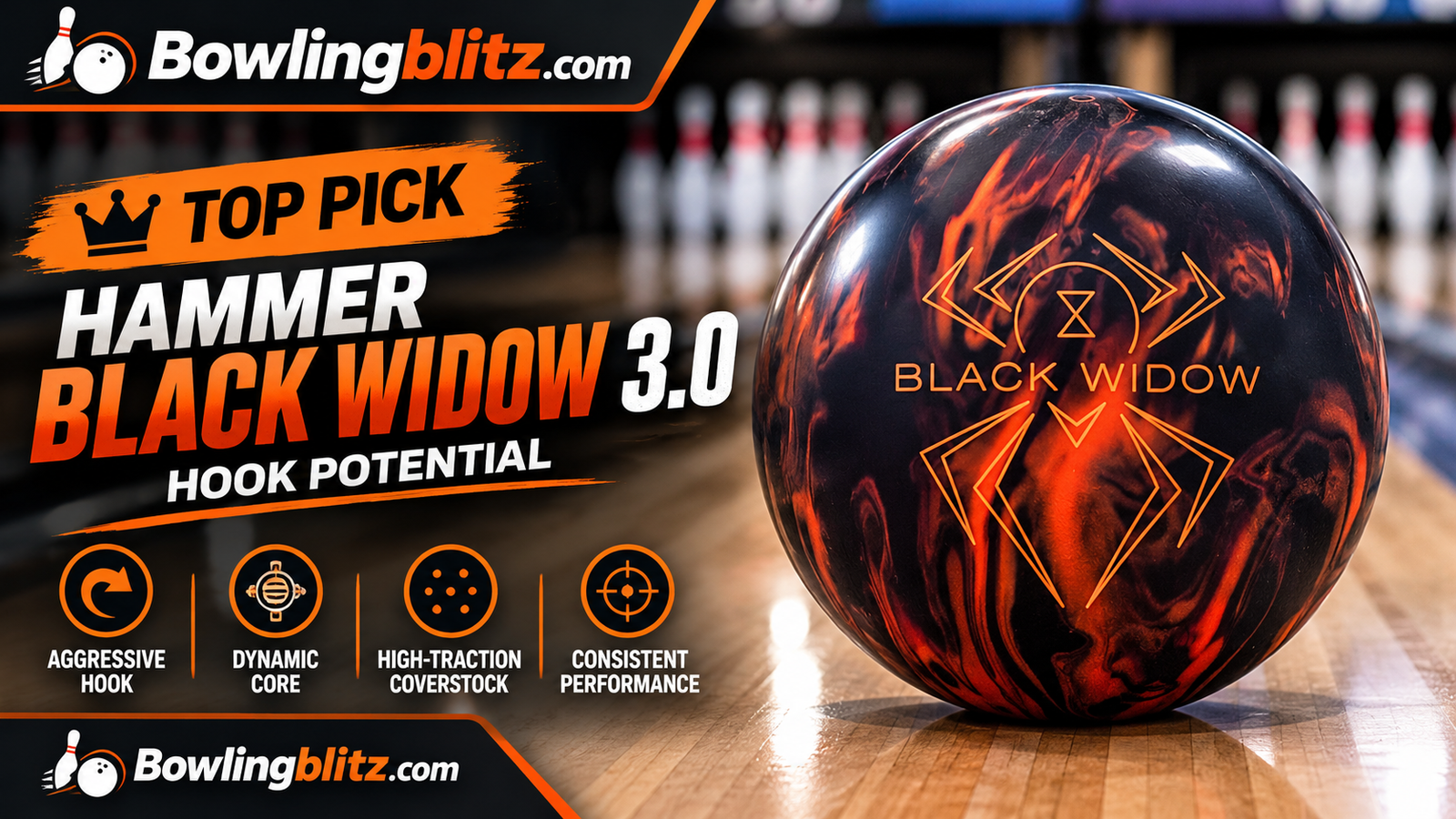
Strong asymmetric hook balls like the Hammer Black Widow 3.0 are built to read the mid-lane and drive through the pins.
Why Finding the Best Hook Bowling Ball Matters
A strike is not created at the pins — it is created about sixty feet earlier, when the ball leaves the oil and starts to respond to the dry boards. The best hook bowling balls are the ones that make that transition predictable, repeatable, and powerful.
If you have been bowling with a house ball or a flat plastic ball, the first time you throw a genuine reactive hook ball feels almost unfair. The ball skids cleanly through the front of the lane, reads the middle, and then swings into the pocket at an angle that sends pins flying sideways instead of straight back. That entry angle is the entire reason bowlers chase hook: it multiplies strike percentage far more than raw ball speed ever will.
The problem is that “hook” is not a single quality. Some balls hook early and roll smooth. Some skid long and snap hard at the end. Some barely hook at all — and that is exactly what makes them perfect for certain bowlers and certain conditions. Buying the biggest-hooking ball on the shelf is a fast route to frustration if your rev rate, speed, and lane condition do not support it.
That is why we built this comparison the way we did. Instead of ranking one ball above all others, we reviewed seven very different balls — from aggressive asymmetric hook balls designed for heavier oil, to benchmark solids that do everything reasonably well, to entry-level and spare-friendly options that offer a first taste of controlled hook. Each review tells you who the ball suits, where it shines, and where it will fight you.
Along the way we will cover the mechanics of hook, how to read ball motion on the lane, a full buying guide covering weight and drilling decisions, and the maintenance habits that keep a reactive ball hooking the way it did out of the box. If you are completely new to the sport, it is worth starting with our beginner bowling ball guide, then coming back here once you know you want the ball to move.
Quick Comparison: Our Top Picks
Every ball in this article appears in the table below, ranked by the role it plays best rather than by one universal score. The top row is our overall pick for bowlers who want maximum hook with real control, but the right ball for you depends on where and how you bowl.
Swipe to see more →
| # | Product | Ball Name | Key Specs | Verdict | Check Price |
|---|---|---|---|---|---|
| 1 |  |
Hammer Black Widow 3.0 Best Overall Hook Top Pick |
|
The one to buy if you want the ball to hunt the pocket from anywhere on the lane. | Check Price on Amazon |
| 2 |  |
Storm Phaze II Best Benchmark Ball |
|
The ball you throw first in practice because it tells you everything about the lane. | Check Price on Amazon |
| 3 |  |
MOTIV Venom Shock Best Controlled Hook |
|
Forgiving, repeatable, and hard to out-bowl — a ball you grow into rather than out of. | Check Price on Amazon |
| 4 |  |
900 Global Ember Best Versatile Mid-Range |
|
A clean look through the fronts with enough teeth to finish strong when the oil breaks down. | Check Price on Amazon |
| 5 |  |
Brunswick Rhino Best First Hook Ball |
|
The safest way to learn a hook without the ball taking over your release. | Check Price on Amazon |
| 6 |  |
Pyramid Path Rising Best Budget Hook |
|
Real hook at a price that does not hurt if you are still working out your style. | Check Price on Amazon |
| 7 |  |
Columbia 300 White Dot Wild Orchid Best for Straight Shooting |
|
Not a hook monster — deliberately. It is the straightest arrow in the quiver for corner pins. | Check Price on Amazon |
What Makes a Bowling Ball Hook?
Before you spend money on a hook ball, it helps to understand what the ball is actually doing on the lane. Hook is not magic, and it is not simply “more spin.” It is friction, delayed and then released at exactly the right moment.
Coverstock: Where Hook Begins
The coverstock is the outer shell of the ball, and it is the single biggest factor in how much the ball reacts. Broadly, covers fall into three families: polyester (plastic), urethane, and reactive resin. Polyester is smooth and low-friction, which is why it goes almost perfectly straight and why it is used for spare shooting. Urethane offers a controlled, mid-lane grip without wild motion. Reactive resin is porous and tacky — it grabs the dry boards and creates the sharp backend motion most people picture when they talk about hook.
If you want the deep version of this, our breakdown of urethane vs reactive vs plastic bowling balls covers the trade-offs in detail, and what bowling balls are made of explains the materials underneath the marketing.
Core: The Engine Under the Hood
If the coverstock decides how much friction the ball creates, the core decides what the ball does with it. Cores are the weight blocks inside the ball, and their shape controls flare — the amount of fresh surface the ball exposes as it travels down the lane. A symmetric core tends to produce a rounder, more readable shape. An asymmetric core creates a more defined break point, which usually means a stronger change of direction when the ball leaves the oil.
For most bowlers, symmetric balls are easier to read and easier to adjust to. Asymmetric balls are weapons in the right hands: they reward good players with extra punch, but they can punish a mistimed release with a violent, unpredictable response.
Surface: The Finish You Can Change
The third factor is surface texture. A dull, sanded finish starts hooking earlier because it creates friction sooner. A polished finish lets the ball skid further down the lane before it responds, which produces a sharper but later motion. Surface is the most adjustable part of a bowling ball — a good pro shop can sand or polish a ball to move its break point several boards without changing anything else.
Why This Matters Before You Buy
Understanding these three variables protects you from the most common buying mistake: choosing a ball that is far too strong for your game. An aggressive asymmetric ball thrown by a bowler with a slow speed and low rev rate will hook into the gutter repeatedly. The same ball thrown by a high-rev player on a soaked lane is a dream. Match is everything, and that is what the rest of this article is designed to help you find.
Hook Styles Explained: Skid-Flip, Arc, and Smooth Roll
When bowlers say a ball “hooks a lot,” they usually mean one of three different things. Learning the language saves you from buying a ball that does the wrong kind of hook for your delivery.
Skid-Flip (Long and Sharp)
Skid-flip balls travel long through the front of the lane and then change direction quickly when they reach the dry. They look spectacular on a good shot and they generate tremendous entry angle. They are also the least forgiving shape in the bag: when the ball reads the lane early or the oil carry-down changes, a skid-flip ball can jump unpredictably. High-rev players and bowlers on wet/dry house shots often love this shape because it lets them stand left and swing the lane.
Controlled Arc (The Benchmark Shape)
The arcing shape is the workhorse. It reads the mid-lane gradually, curves smoothly toward the pocket, and never makes a violent decision without warning. This is the motion most coaches recommend for learning bowlers because it gives you usable feedback: miss right and it comes up light, miss left and it holds. Benchmark balls like the Storm Phaze II and MOTIV Venom Shock sit squarely in this category, and honestly, most average bowlers score higher with an arc than with a sharp snap.
Smooth and Early (Heavy Oil Movers)
Strong, early-reading balls start their motion sooner and roll heavier through the pin deck. They are essential on heavier oil patterns where skid-flip balls simply slide past the breakpoint. They require the bowler to keep the ball speed up and trust the roll, and they reward accuracy over flair. This is where a strong asymmetric ball earns its keep — it digs through the oil and still finishes.
The Honest Truth About “More Hook”
More hook does not equal more strikes. A ball that hooks four boards more than your current ball will cost you scores if it hooks four boards more than your release can control. The best hook bowling ball is the one whose shape matches your shot-making window, not the one with the wildest motion in the demo video.
Two-handed bowlers generate naturally high rev rates and often want a different balance of length and control than one-handed players — if that is you, see our picks for the best two-handed bowling balls.
Hammer Black Widow 3.0
The Black Widow name carries real weight in bowling, and the 3.0 carries that legacy forward with the kind of motion that makes league bowlers switch brands. This is a ball built to create hook on demand: it digs through oil in the mid-lane and drives hard off the breakpoint without the violent, all-or-nothing snap that some strong balls deliver.
What separates the Black Widow 3.0 from a lot of other high-hook balls is how usable its aggression is. Strong asymmetric balls are notorious for being spectacular on perfect shots and miserable on everything else. The Black Widow line has always leaned toward “powerful but readable,” and the 3.0 keeps that character intact. When you throw it well, it rewards you with one of the strongest entries into the pocket in this entire comparison. When you throw it badly, it usually tells you where you missed rather than jumping three boards over your intended mark.
Key Features
- Asymmetric core design — creates a defined break point and strong flare for maximum backend motion.
- Aggressive reactive coverstock — generates friction in the mid-lane so the ball can read heavier oil volumes.
- High hook potential — one of the strongest overall reactions in this comparison.
- Proven product line — the Black Widow family has a long track record among league and tournament bowlers.
- Strong pin carry — the steep entry angle tends to drive through the deck rather than deflecting.
What We Like
- Enormous hook potential without feeling uncontrollable
- Performs on heavier oil where weaker balls slide
- Defined, readable break point
- Excellent drive through the pin deck
Keep in Mind
- Too much ball for dry lanes or very low rev rates
- Requires a consistent release to get the best shape
- Stronger surface needs regular cleaning to stay consistent
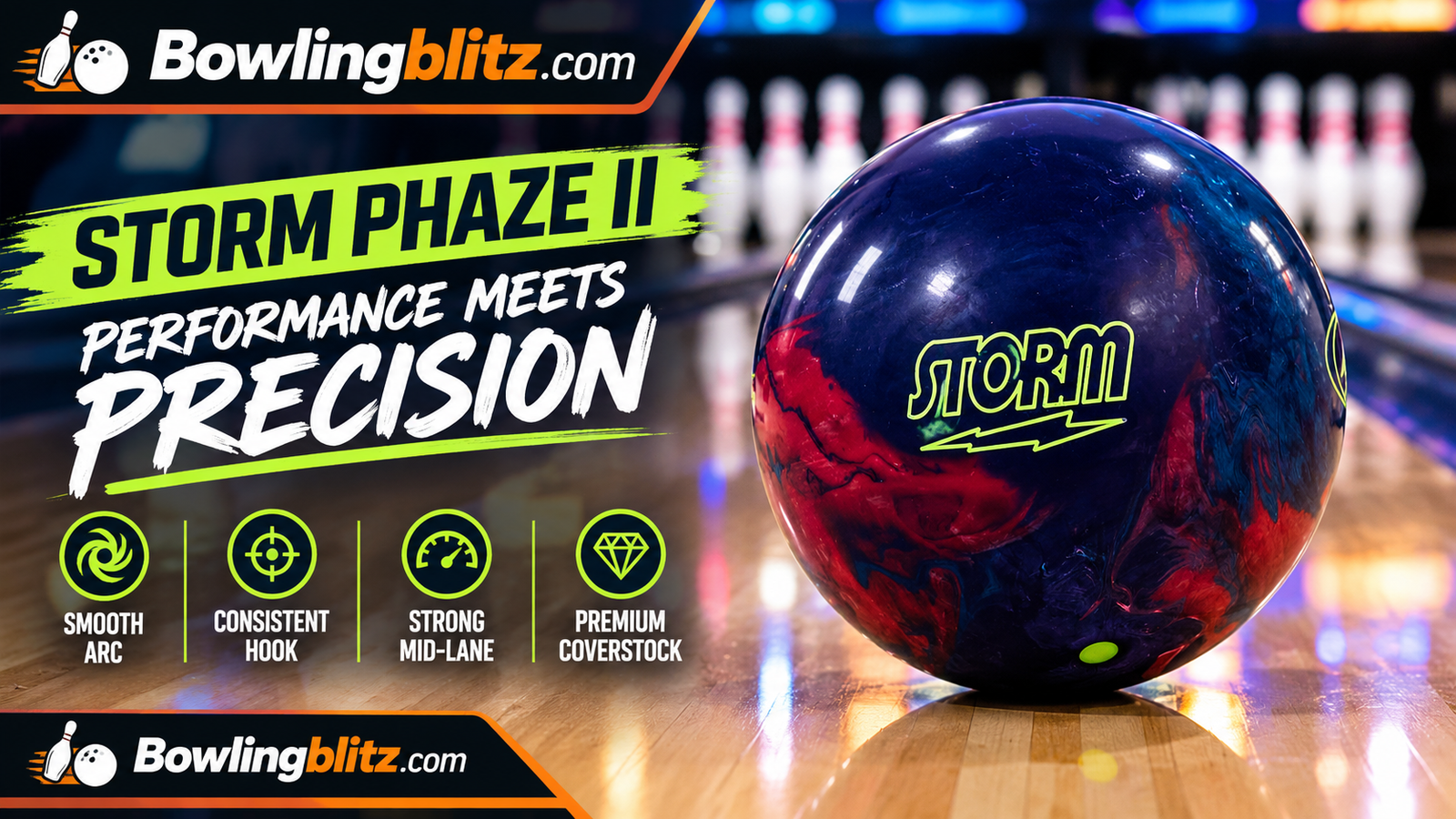
Storm Phaze II
Every bowler needs a benchmark — the ball they throw first in practice to figure out what the lane is doing. The Storm Phaze II is that ball for a huge number of players, and it earns the reputation by doing nothing flashy and almost nothing wrong.
The Phaze II is a symmetric-core ball with a solid reactive coverstock, and that combination is the definition of a classic benchmark shape. It reads the mid-lane smoothly, curves through a predictable arc, and finishes with authority rather than a snap. There is no drama in its motion, and that is precisely the point: when you can trust the shape of your first ball, every adjustment you make afterward becomes easier.
Practically, this means the Phaze II is a ball you can throw on a huge range of medium to medium-heavy conditions and score with immediately. It is not the strongest ball in this comparison, and on a flooded lane a higher-hooking option like the Black Widow 3.0 will out-maneuver it. But on a typical house shot — the kind of condition league bowlers see every week — the Phaze II’s blend of read and recovery is hard to beat.
Key Features
- Symmetric core design — produces a round, readable motion that is easy to adjust to.
- Solid reactive coverstock — grips the mid-lane for an earlier, more controlled read.
- Benchmark motion — a reliable first ball out of the bag on medium conditions.
- Versatile shape — works for a wide range of styles, from stroker to cranker.
- Forgiving on misses — tends to blend small errors rather than magnifying them.
What We Like
- Incredibly consistent, readable ball motion
- Works for almost any release style
- Excellent value as a one-ball arsenal
- Teaches you to read the lane properly
Keep in Mind
- Not designed for maximum hook on heavy oil
- Solid covers need regular cleaning to keep their shape
- Less backend snap than pearl options
MOTIV Venom Shock
The Venom Shock is one of those quietly excellent balls that never needs to shout. It is designed around controllable hook: enough motion to strike consistently, never so much that you are guessing where it will finish.
For the average league bowler, controllability is worth more than raw power, and that is where the Venom Shock lives. Its symmetric core gives it a smooth, rounded shape through the mid-lane, and its mid-strength reactive coverstock creates friction without grabbing the lane like sandpaper. The result is a ball that reads the same way shot after shot, which is exactly what you need when you are trying to build a repeatable game.
It is also a genuinely forgiving ball. If your release is a little inconsistent — and most recreational bowlers’ releases are — the Venom Shock tends to smooth over the small stuff. Throw it a touch slow and it holds line. Throw it a touch fast and it still gets down the lane. That predictability is why so many bowlers keep a Venom Shock in the bag long after they have moved on to stronger equipment.
Key Features
- Symmetric core design — a smooth, rounded shape that is easy to read on the lane.
- Mid-strength reactive coverstock — grips medium oil without over-reacting to dry boards.
- Predictable mid-lane read — helps you make accurate, confident adjustments.
- Forgiving response — blends minor release errors instead of punishing them.
- Broad appeal — suits a wide range of rev rates and ball speeds.
What We Like
- Exceptionally repeatable ball motion
- Forgiving on off-target shots
- Excellent on medium oil house shots
- A ball that grows with your skill
Keep in Mind
- Will not move as much as high-end asymmetric balls
- Less effective on heavily oiled tournament patterns
- Solid cover needs routine upkeep to stay clean
900 Global Ember
The Ember is the ball for bowlers who want hook without committing to an extreme shape. It blends length through the fronts with a controlled finish, which makes it unusually comfortable across changing lane conditions.
Most bowlers eventually discover that their most aggressive ball is only useful for part of the night. As the oil carries down and the track dries out, a big-hook ball becomes a liability and you need something cleaner. That is the gap the Ember fills. It gets down the lane more easily than a heavy solid, then responds with a smooth, controllable recovery rather than a violent snap.
This shape is especially helpful on league nights where the shot changes as the session goes on. You can start with the Ember and stay with it, or move into it from a stronger ball when the fronts get dry. It is the kind of ball that earns its place through versatility rather than one spectacular trait, and versatility is what scores over a full block.
Key Features
- Reactive coverstock — creates genuine hook while keeping the front of the lane readable.
- Blend of length and recovery — clean through the heads, responsive off the dry.
- Controllable backend shape — enough entry angle without wild over-reaction.
- Medium oil friendly — built for the conditions most league bowlers see.
- Adjustment friendly — surface changes noticeably affect its shape, letting you tune it.
What We Like
- Versatile across changing lane conditions
- Clean through the fronts without being weak
- Smooth, controllable backend reaction
- Good value in the mid-range category
Keep in Mind
- Not the strongest choice for heavy oil
- Less overall hook than top-end asymmetric balls
- Shines most when paired with proper surface upkeep
Brunswick Rhino
If you are buying your first ball designed to hook, the Rhino is one of the safest and most satisfying places to start. It offers real reactive motion, but in a gentle, manageable shape that teaches you instead of overwhelming you.
The jump from a house ball to a reactive hook ball is bigger than most people expect. Suddenly the ball responds to your hand, and that response can feel out of control if the ball is too strong. The Rhino avoids this problem. Its mild reactive coverstock creates a soft, arcing motion that moves toward the pocket without any dramatic snap at the end. You can see it working, understand what it is doing, and gradually build the release that makes it hook more.
It is also a genuinely forgiving ball on light to medium oil. Because it is designed to read the lane gradually rather than aggressively, it does not punish small mistakes with huge misses. That makes it ideal for bowlers averaging in a developing range who want to see their scores climb as their physical game improves.
Key Features
- Mild reactive coverstock — creates manageable hook without sharp over-reaction.
- Symmetric, low-flare design — produces a smooth, rounded shape on the lane.
- Light to medium oil friendly — performs best on typical house conditions.
- Beginner-friendly response — forgiving of small release errors.
- Great learning platform — lets you develop your game before moving to stronger equipment.
What We Like
- The ideal first reactive ball
- Gentle, controllable hook shape
- Very forgiving on off-target shots
- Works on most standard house conditions
Keep in Mind
- Not enough ball for heavy oil patterns
- Advanced players may want more overall motion
- Modest backend compared to stronger reactive balls
Pyramid Path Rising
Hook does not have to cost a fortune. The Path Rising is aimed squarely at bowlers who want genuine reactive motion at a price that makes sense for a first ball or a practice ball.
Value balls get a bad reputation, mostly because a lot of them cut corners where it matters. The Path Rising takes the sensible route: it uses a reactive coverstock and a conventional core design, which means it delivers the same basic hook mechanics as more expensive balls — just in a friendlier, more forgiving package. It is not built to dominate heavy oil, and it is not trying to. It is built to give a developing bowler a real hook at an accessible price.
On a standard house shot, that is exactly what most recreational bowlers need. The Path Rising skids through the front, reads the dry boards, and arcs toward the pocket with enough motion to reward a good release. It is also a smart choice if you want a ball you can practice with without worrying excessively about every scuff and scratch.
Key Features
- Entry-level reactive coverstock — delivers genuine hook mechanics at a friendly price.
- Comfortable weight range — available in options suitable for youth and adult bowlers.
- House-shot friendly — designed around typical recreational lane conditions.
- Value-focused build — sensible performance without premium pricing.
- Good practice ball — ideal for working on release and timing.
What We Like
- Genuine hook performance at a budget price
- Friendly, controllable ball motion
- Great for learning without a big investment
- Solid choice for casual league play
Keep in Mind
- Not intended for heavy oil or tournament patterns
- Less overall punch than premium reactive balls
- You will likely upgrade as your game develops
Columbia 300 White Dot Wild Orchid
Here is the honest caveat: the White Dot Wild Orchid is not a hook ball in the traditional sense, and that is exactly why it belongs on this list. Sometimes the right ball is the one that does not hook.
Every serious bowler eventually needs a ball they can trust to go straight. Corner pins, split conversions, spare shooting on a dry lane — these are the shots where hook becomes a liability and accuracy becomes everything. A polyester ball like the White Dot Wild Orchid goes almost exactly where you throw it, which turns ten-pin and seven-pin attempts from a guessing game into a simple target shot.
It is also a brilliant answer for bowlers who hook the ball too much. If your reactive ball is consistently over-reacting on dry conditions, adding a straight ball to your bag solves the problem far more cheaply than buying another hook ball and fighting it. And the Wild Orchid finish adds a little personality to a category that is usually visually plain, which is a nice bonus when the ball is sitting in your rack.
Key Features
- Polyester coverstock — low-friction surface that travels straight and true.
- Minimal hook reaction — ideal for accuracy-focused shots.
- Excellent spare-shooting ball — takes the guesswork out of corner pins.
- Durable and low-maintenance — polyester resists damage and keeps its shape.
- Distinctive Wild Orchid finish — a stand-out look in the rack.
What We Like
- Goes straight with total predictability
- The best spare-shooting tool in this comparison
- Virtually no maintenance required
- Excellent companion to any hook ball
Keep in Mind
- Will not give you the hook motion most buyers want
- Not a strike ball on most house conditions
- Best owned as a second ball rather than an only ball
How to Choose the Right Hook Ball for Your Game
Reading reviews is the easy part. Choosing the ball you will actually score with takes a little honest self-assessment. Here is the framework we recommend using before you spend anything.
Start With an Honest Look at Your Delivery
Ball speed and rev rate determine how much hook you can actually use. A bowler with higher revs and moderate speed creates plenty of friction naturally, so a weaker or cleaner ball often strikes more than a strong one. A bowler with high speed and low revs needs help from the equipment — a stronger coverstock and more surface to create the friction their release does not. If you are not sure which you are, ask a coach or pro shop operator to watch a few shots. It takes two minutes and saves you years of buying the wrong equipment.
It is also worth noting that physical strength, hand position, and how you release the ball all feed into this. Bowlers looking to add wrist support or stabilize their release can see our picks for the best bowling wrist supports, which can genuinely change how much axis rotation you put on the ball.
Choose Your Weight Carefully
Weight matters more than most beginners realize. Too heavy and you lose control and risk injury; too light and the ball loses hitting power and consistency. The classic advice still holds — choose the heaviest ball you can throw comfortably and repeatedly for a full session. For a deeper breakdown, read what weight bowling ball you should use.
Budget for Drilling, Not Just the Ball
The sticker price of the ball is only part of the cost. Drilling is a separate service, and it is arguably the most important part of the purchase, because a ball drilled for someone else’s hand will never work properly for yours. Layout matters too: where the holes are placed relative to the core affects how much the ball flares and where it reads the lane. Read how much it costs to drill a bowling ball so the total outlay does not surprise you.
Match Coverstock to Your Lane
Most recreational bowlers bowl on the same house shot week after week, which makes choosing simple: medium oil calls for a benchmark solid or a versatile reactive ball. If you travel for tournaments or bowl in multiple houses, you will need to think about the range of conditions you face and build a small arsenal rather than relying on one ball. A strong ball for oil, a cleaner ball for transition, and a straight ball for spares covers almost everything.
Do Not Skip Fit and Finish
Span, pitch, and grip pressure matter enormously. A ball that does not fit your hand will force you to squeeze, which destroys the release and makes every ball look weak. Take the time to get properly fitted — it is free with most drilling services and it is the difference between a ball that works and a ball that sits in the closet. And if you want the complete picture before you buy, our full guide on how to choose a bowling ball walks through every decision step by step.
Matching the Ball to the Lane and Your Style
The same ball will look completely different in two different bowling centers, and the reason is oil. Lane oil is invisible, but it is the single biggest variable in how your ball behaves. Understanding the condition you bowl on turns buying a ball from a gamble into a decision.
Heavy Oil: You Need Friction
When the lane is loaded with oil, weaker balls simply slide past the breakpoint and hit the pocket flat. Stronger coverstocks with more surface texture read the oil earlier and still finish. This is the domain of high-hook asymmetric balls and strong solids. If you consistently leave flat tens and weak hits on your house shot, more hook potential is probably the answer.
Medium Oil: The Comfort Zone
Most house shots sit in this range, which is why benchmark balls dominate league play. Medium oil lets a symmetric reactive ball blend length and recovery beautifully. It is also the most forgiving condition to learn on, because the oil and dry are balanced enough that good shots are rewarded.
Dry and Transition: Go Cleaner
As lanes dry out — usually as a league session wears on — strong balls start hooking early and burning up energy before they reach the pins. Cleaner covers with polished finishes stay long and finish downlane where the carry is. Keeping a cleaner ball in your bag for the third game is one of the simplest scoring upgrades you can make.
Spares: Straight Beats Hook
For corner pins and most single-pin leaves, hook is your enemy. A polyester ball aimed at the same mark every time converts far more spares than a hook ball aimed at the pocket. This is not glamorous advice, but it is the fastest route to a higher average for most bowlers.
Swipe to see more →
| # | Ball | Best Lane Fit | Hook Shape | Best For | Check Price |
|---|---|---|---|---|---|
| 1 |
Hammer Black Widow 3.0
|
Heavier oil | Strong, defined break | Best for Heavy Oil | Check Price on Amazon |
| 2 |
Storm Phaze II
|
Medium to medium-heavy | Smooth arc | Best Benchmark | Check Price on Amazon |
| 3 |
MOTIV Venom Shock
|
Medium oil | Controlled, forgiving | Best for Consistency | Check Price on Amazon |
| 4 |
Brunswick Rhino
|
Light to medium | Gentle arc | Best for Dry Lanes | Check Price on Amazon |
| 5 |
Columbia 300 White Dot Wild Orchid
|
Any condition | Straight | Best for Spares | Check Price on Amazon |
Building a Balanced Arsenal
If you bowl regularly and want to improve, a two- or three-ball arsenal covers almost every league situation: one stronger ball for the fresh shot, one cleaner ball for transition, and one straight ball for spares. You do not need to buy all three at once. Start with the ball that fixes your biggest problem today, then add from there.
Carrying more equipment means carrying more weight, which is where a good bag comes in. Our guide to the best bowling bags covers everything from single-ball totes to tournament rollers. And if you are curious why lane conditions change so much between centers, what bowling lanes are made of explains the surfaces and oil patterns behind the differences.
Care, Maintenance, and Storage for Hook Balls
Reactive bowling balls are investments, and like any investment they degrade if neglected. The good news is that maintenance is simple, quick, and dramatically extends the life of your ball’s hook.
Clean After Every Session
Reactive covers are porous by design — that porosity is what creates friction and hook. Over time, lane oil, dirt, and belt residue work their way into those pores and flatten the ball’s reaction. Wiping the ball with a dedicated bowling ball cleaner after each session pulls that oil out before it settles. A ball that is cleaned regularly hooks noticeably longer than one that is not, and it costs almost nothing in effort.
Use a cleaner designed for bowling balls rather than household sprays, which can damage the coverstock. Our step-by-step guide on how to clean a bowling ball covers both quick cleaning between games and deep cleaning at home.
Resurface When the Reaction Changes
If your ball used to hook and now it slides, the surface is usually the culprit rather than the core. Resurfacing — sanding the ball back to its intended finish — restores the reaction and costs far less than buying a replacement. Most league bowlers benefit from a resurface once or twice a year depending on how often they bowl.
You can have this done at a pro shop or do it yourself with the right pads and technique. See how to resurface a bowling ball for a safe, repeatable process that does not damage the coverstock.
Store It Properly
- Avoid heat. A hot car trunk can warp a ball and change its balance permanently.
- Keep it out of direct sunlight. UV exposure dries and fades the coverstock over time.
- Store it at stable room temperature. Consistency protects both the cover and the core.
- Use a proper bag. Padding protects the surface from scuffs and keeps accessories organized.
- Rotate your balls. If you bowl a lot, alternating balls gives each one time to rest and off-gas absorbed oil.
Protect the Rest of Your Setup
Your ball is only one part of a working kit. Clean, well-fitting shoes improve your slide and approach consistency, and a bag that actually protects your equipment saves money over time. If you are still using house shoes, it is worth reading about why bowling shoes are different before your next session.
Frequently Asked Questions About Hook Bowling Balls
What is the best bowling ball for hook overall?
For pure hook potential with real control, the Hammer Black Widow 3.0 is our top pick in this comparison. That said, “best overall” depends on your game: if you want a smoother, more readable shape, the Storm Phaze II or MOTIV Venom Shock will score better for you. Match the ball to your rev rate and lane condition rather than chasing the highest hook number.
Do more expensive bowling balls hook more?
Not always. Price usually reflects the technology and materials in the core and coverstock, and premium balls do tend to offer stronger, more complex motion. But a premium ball that is wrong for your delivery will hook worse than a budget ball that fits it. Coverstock type and fit matter more than price.
Why does my ball hook less than it used to?
The most common reason is oil absorption and surface wear. Reactive covers pull oil into their pores over time, which reduces friction and flattens the reaction. Cleaning and resurfacing usually restores most of the hook. If that does not help, the coverstock may simply be worn enough to justify replacing the ball.
What weight bowling ball should I use for hook?
The best weight is the heaviest ball you can throw comfortably and repeatedly without strain. Heavier balls carry more energy through the pins, but only if you can control them. Most adults find their sweet spot in a moderate range, and teenagers and youth bowlers should always prioritize fit and control. Our guide on choosing the right ball weight covers the details.
Do I need a spare ball as well as a hook ball?
Strongly recommended. A straight polyester ball such as the Columbia 300 White Dot Wild Orchid converts corner pins far more reliably than a hook ball, because it removes oil and dry variables from the equation. Most bowlers see their average rise simply by making more spares, and a spare ball is the cheapest way to get there.
Can a beginner bowl with a strong hook ball?
You can, but it is rarely the fastest route to improvement. Strong balls magnify release errors, which makes it harder to develop a consistent swing. A milder reactive ball like the Brunswick Rhino teaches you what the ball is doing and rewards good shots, which builds skill faster. Once your release is consistent, stronger equipment becomes a real advantage.
How much should I spend on a first hook ball?
Plenty of excellent entry-level reactive balls exist at budget-friendly prices, including the Pyramid Path Rising. Remember to factor in drilling and accessories. Our breakdown of bowling ball costs lays out the full picture so you can budget realistically.
Does drilling affect how much a ball hooks?
Yes, significantly. The layout — where the finger holes sit relative to the core — controls flare and where the ball reads the lane. Two identical balls with different layouts can look like completely different equipment. This is why buying an undrilled ball and having it fitted to your hand is worth the extra step.
How do I make my ball hook more?
Three levers: surface, layout, and your release. Adding surface texture creates more friction and an earlier read. A stronger layout increases flare. And increasing axis rotation or reducing ball speed creates more overall hook. Of the three, surface is the easiest and cheapest to experiment with.
Do bowling shoes affect my hook?
Not directly, but they affect your consistency, which affects everything. Proper bowling shoes give you a controlled slide and a stable approach, and house shoes that fit badly will subtly alter your timing and release every game. If you are buying your own ball, buying shoes is the logical next step — see our picks for the best bowling shoes.
How often should I replace a bowling ball?
There is no fixed schedule. Most league bowlers who bowl weekly get several strong seasons from a reactive ball if they clean and resurface it regularly. Replace it when cleaning and resurfacing stop restoring the reaction, or when your game has changed enough that the ball no longer matches your delivery.
Is it worth buying bowling equipment online?
It can be, particularly for balls you already know you want and for accessories and care products. The one thing you cannot skip is having the ball drilled and fitted locally, because fit is personal. Many bowlers buy the ball online and take it straight to their pro shop for drilling. For more on where to shop, see where to buy bowling balls.
Final Verdict: Which Hook Ball Should You Buy?
The best hook bowling ball is not the one with the most dramatic motion on paper — it is the one that matches your speed, your rev rate, and the oil you actually bowl on. That said, a few clear recommendations came out of this comparison.
For maximum hook with real control, the Hammer Black Widow 3.0 is the standout. It has the power to move on heavier oil and the shape to stay readable when you do not throw it perfectly.
For a benchmark ball you can trust every week, the Storm Phaze II and MOTIV Venom Shock are both excellent, and choosing between them comes down to whether you want a smoother arc or a slightly more forgiving response.
For bowlers still building their game, the Brunswick Rhino and Pyramid Path Rising deliver genuine hook without overwhelming your release — and the 900 Global Ember is a versatile option once you want to cover changing conditions.
And for spares and straight shooting, the Columbia 300 White Dot Wild Orchid is a smart, inexpensive addition that will quietly raise your average.
Whichever route you take, get the ball properly fitted, keep it clean, and give yourself a few sessions to learn its shape. A new ball only pays off once it becomes predictable — and once it does, you will wonder how you ever bowled without it.
Check Prices on AmazonThis article contains affiliate links. If you purchase through links on this page, we may earn a commission at no additional cost to you. Product availability and specifications can change, so always confirm details on the retailer’s listing before purchasing. Bowling performance varies based on lane conditions, drilling layout, and individual delivery.